This post may contain affiliate links. If you use them to buy something, I may earn a commission at no extra cost to you.
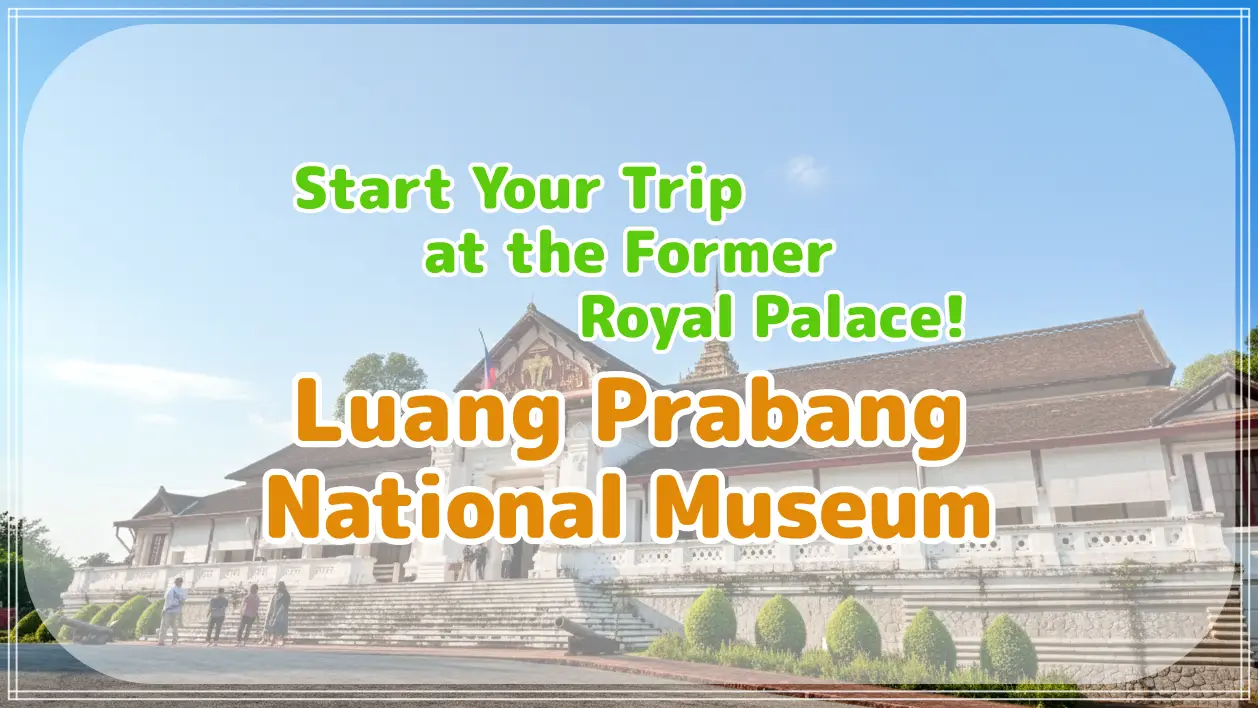
When I think about where to “start” sightseeing in Luang Prabang, my mind goes straight to the National Museum – the former Royal Palace right on the main street.
It’s compact, manageable, and full of small details that quietly pull you into the city’s history.
If you’re a first-time visitor, a family, or someone who prefers a gentle cultural stop over a jam-packed schedule, this is an easy first morning or first afternoon.
In this guide, I’ll walk through how the museum works (hours, dress code, lockers), what to look for inside, the other buildings in the grounds, and a few tips from when I visited so you can enjoy it without stress.
The museum sits right on the main street of Luang Prabang’s old town, so you’ll probably walk past the entrance more than once during your stay.
Because of the split opening hours and relatively early closing time, it’s important to plan around the lunch break and the 16:00 closing time so you don’t turn up to locked gates.
Tabilus – Go Travel, Go Missing
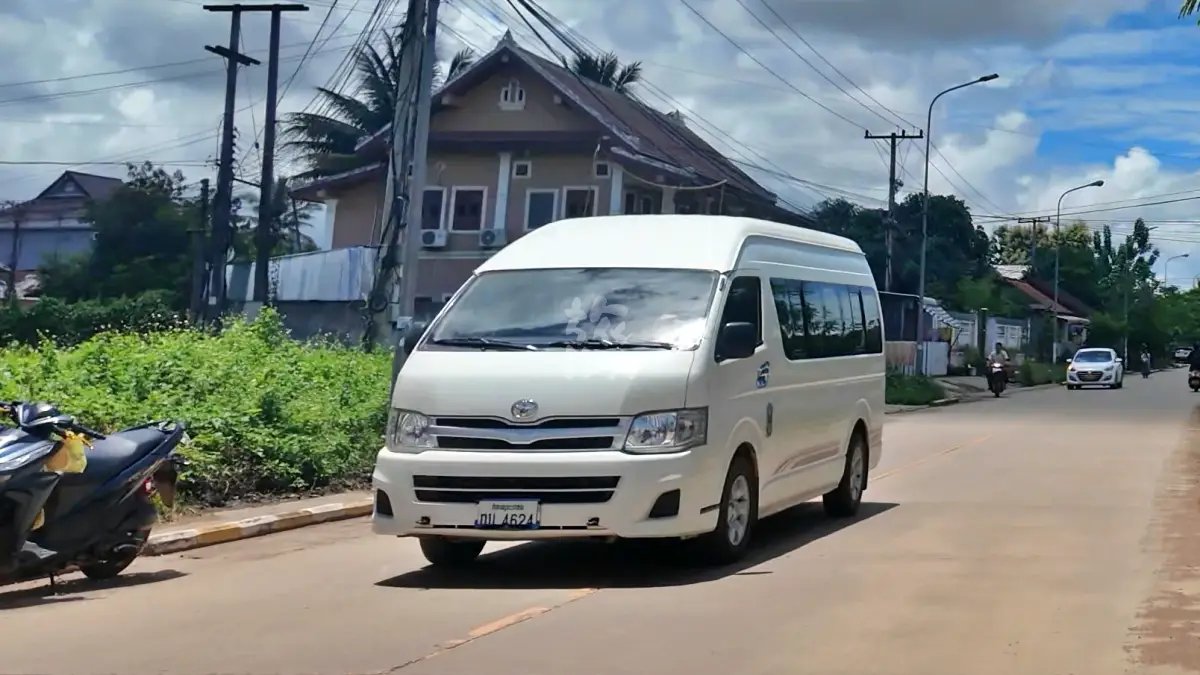
\Skip haggling and surprises—reserve a fixed-price transfer to your hotel./
How did the former Royal Palace become the Luang Prabang National Museum?
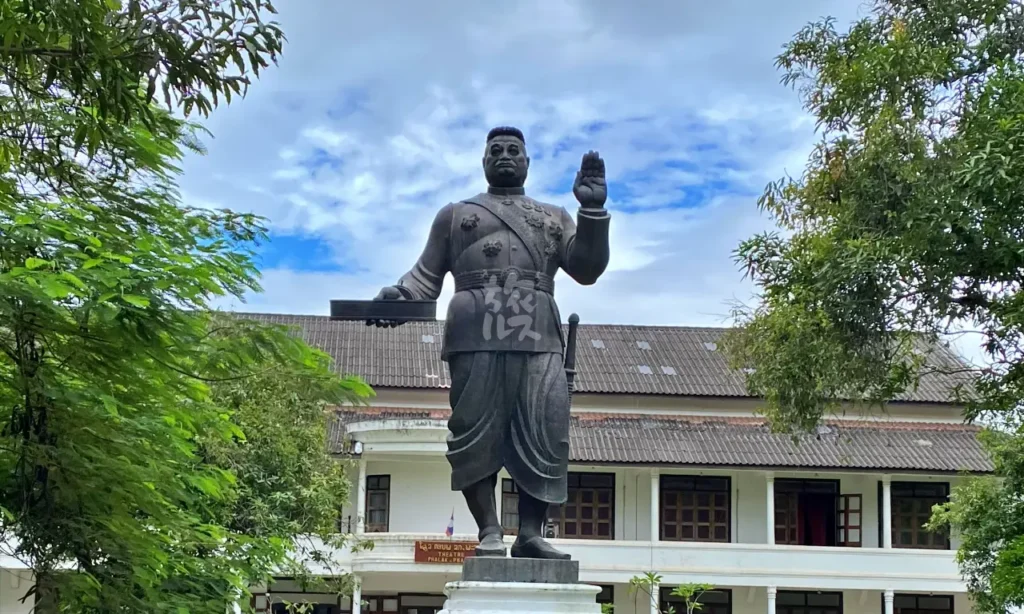
King Sisavang Vong The building that is now the museum was originally constructed as a royal palace for King Sisavang Vong and his family.
Construction started in 1904 and took six years; the palace was completed in 1909.
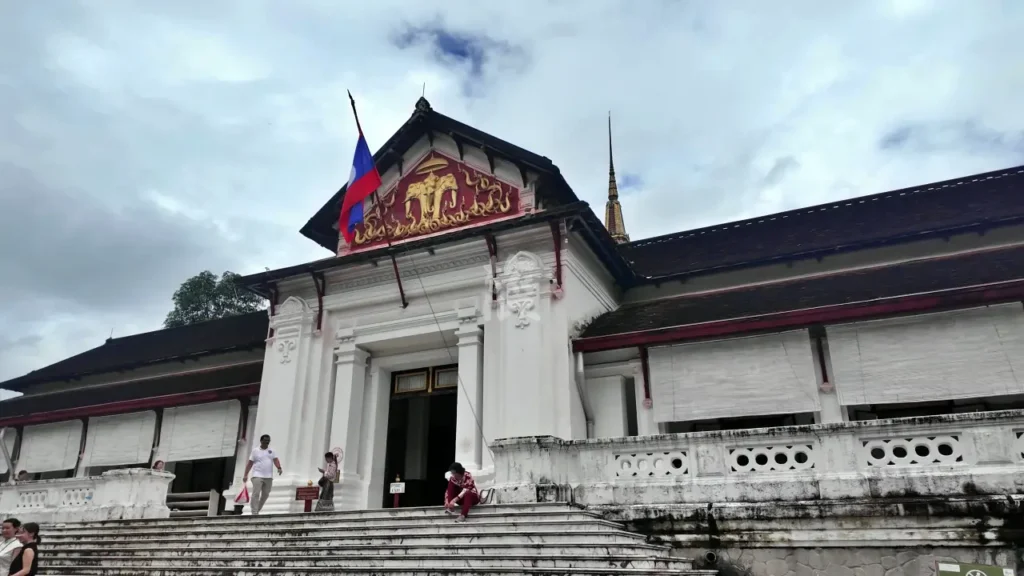
Architecturally, it’s a blend: the overall layout is a European-style, symmetrical Beaux-Arts design, but the golden roof decorations and exterior ornamentation are very much Lao.
Standing in front of it, you can feel that mix of French influence and local tradition.
When I first saw it in person, the effect was elegant but slightly surreal in the middle of such a relaxed town.
Even after King Sisavang Vong’s death, the palace remained a royal residence.
Crown Prince Savang Vatthana and his family lived here until 1975, when the monarchy was abolished after the revolution.
The palace was then taken over by the Lao government, renovated, and eventually opened as the Luang Prabang National Museum in 1995.
Today, you walk through the same reception rooms and private quarters where the royal family once lived, but with explanatory labels and carefully preserved objects instead of court officials.
\See the museum, Phousi Hill and the Night Market in one easy highlights tour./
What does the inside of the former Royal Palace feel like?
Because this is a former royal residence, simply walking through the rooms is enjoyable even before you start reading the labels.
The walls are a deep red that makes the gold decorations and lacquer work glow.
When I visited, that mix of grandeur and homeliness was what stayed with me the most.
In total, 12 rooms are open to visitors , including the reception rooms near the entrance and the private family area deeper inside.
Inside, there are three main “zones” you shouldn’t miss.
Throne Hall (Throne Room)
For many visitors, and for me as well, the Throne Hall is the single biggest highlight of the museum.
The room is dominated by vivid red and gold, with colourful mosaic panels on the walls depicting scenes from the Ramayana and everyday Lao life.
There’s something almost cute about the tiny mosaic figures, even though the room is extremely formal.
In the centre of all this are the gilded throne and ceremonial objects.
The palace’s Lao name “Haw Kham” means “Golden Palace”, and the Throne Hall really lives up to that name.
I honestly felt that even if you only came here to see this one room, the ticket would still be worth it.
Royal living quarters
The private area includes the king’s reception room and bedroom, the queen’s bedroom, children’s bedroom, and the dining room.
These are viewed from the corridor, as if you’re quietly looking into a preserved home.
The furniture and layout are kept as they were in 1975, just before the royal family left the palace.
You can sense everyday life here more than in the formal hall – how the family might have gathered, how they moved through these spaces.
Displayed objects and the Pra Bang
Each room has only a small number of items on display, so the space doesn’t feel cluttered.
The most important object connected to the palace is the Pra Bang , the protective Buddha image of Luang Prabang.
It is said to have been created around 2,000 years ago and is considered one of the most sacred golden Buddha images in the country.
Alongside the Pra Bang, you’ll see other valuable Buddha images, works of art and craft from the royal collection, and state gifts from foreign countries.
One surprise for me was a “moon rock” gifted by the United States – I didn’t expect to see that in this peaceful little palace museum.
Important rules: lockers, no photos and dress code you should know before you go
Because the museum is both a sacred former palace and home to many valuable objects, there are several strict rules.
Knowing them in advance makes your visit smoother.
Lockers and bags
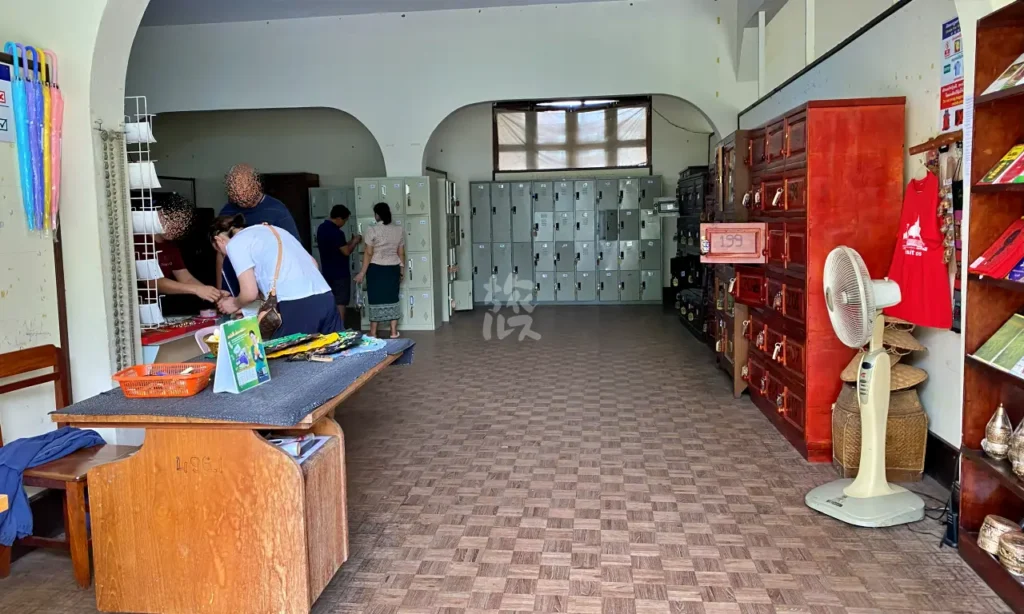
Inside the locker room at the Royal Theatre No bags of any size are allowed inside the museum – not even a small pouch.
At the entrance, staff check carefully and will tell you to put your bag in a locker if you are carrying anything.
The lockers are in the Royal Theatre building near the entrance.
They are free to use, but there is a short walk between the theatre and the museum entrance, so it’s best to leave your belongings there before you queue for tickets.
No photography inside
Photography is strictly prohibited inside the museum.
Cameras and smartphones are not allowed inside the building at all.
It can feel disappointing because so many things are beautiful, but that’s the rule.
When I visited, I saw a tourist secretly take a photo with a phone; a staff member appeared immediately and made them delete the picture on the spot.
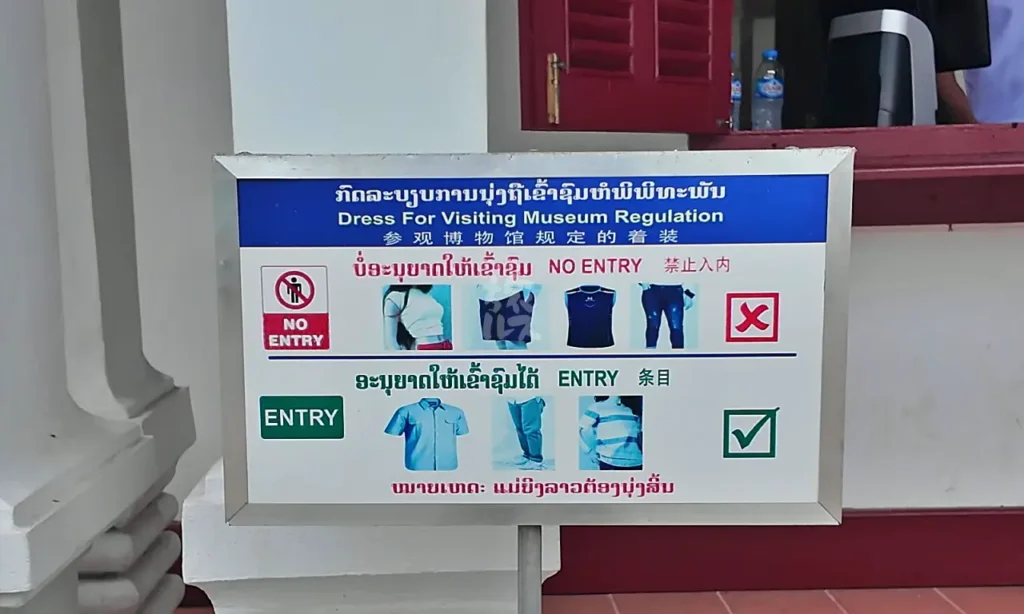
Dress code and footwear
As a former royal palace and sacred space, the museum has a dress code.
Clothing that exposes the shoulders, legs or stomach is not allowed.
If you arrive in shorts, a tank top or any outfit they consider too revealing, you’ll be asked to rent a long skirt, long trousers, or a shawl to cover up before entering.
These cover-ups are available for a fee.
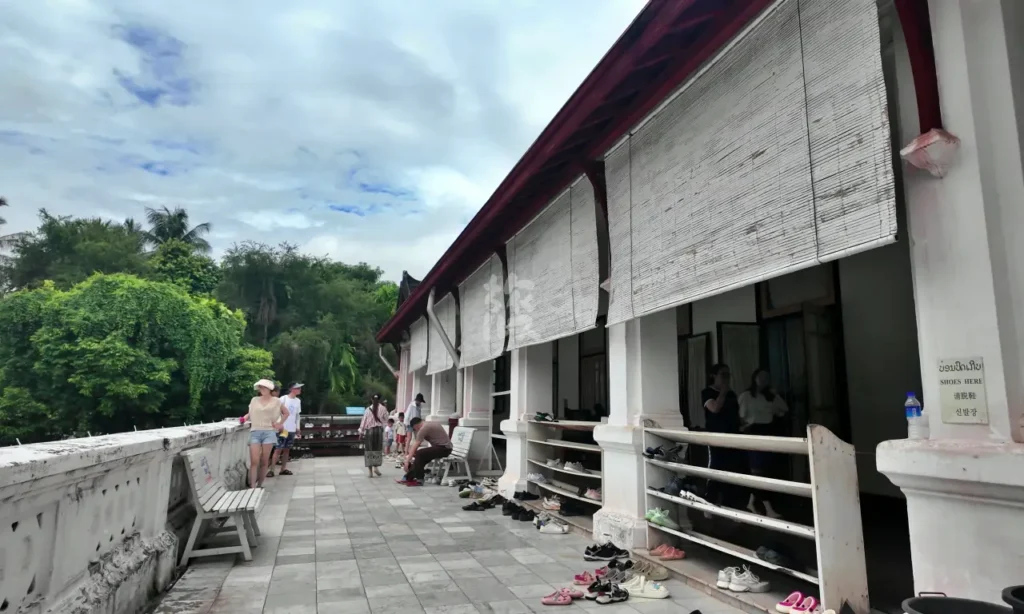
Museum (Former Royal Palace) Entrance Inside the palace itself, shoes must be removed.
On busy days, especially when large tour groups arrive, the shoe racks fill up quickly and people start leaving shoes directly on the floor.
That’s another reason it’s nice to time your visit so you don’t enter right behind a big group.
ADVICE ADDED
If you’re fussy about your footwear, you may want to wear shoes that are easy to slip on and off, and avoid bringing your favourite pair on a very crowded day.
When is the best time to visit to avoid tour groups?
The museum is a popular stop for group tours, and when a couple of tour buses arrive at once, the interior becomes very crowded.
The palace rooms are not huge, so if you enter with a large group, it can be hard to see the displays at your own pace.
However, this busy period is usually temporary.
If you see a long line of group visitors at the entrance, you can adjust your timing:
Walk around the grounds first and visit the other buildings (the Pra Bang shrine, classic car garage, or the Royal Theatre).
Sit on a bench in the garden and wait 15–20 minutes for the group to move on.
The easiest way to avoid groups is to go early.
If you visit just after the museum opens at 8:00 am, there are usually no tour groups yet, and you can enjoy the interior in a calmer atmosphere.
Because you have to remove your shoes at the entrance to the palace building, arriving before the big groups also makes it easier to find space on the shoe racks and keep track of your own shoes.
ADVICE ADDED
If you’re travelling in peak season and staying nearby, starting your day at the museum and then moving on to other sights is a simple way to keep your sightseeing day relaxed instead of fighting crowds.
What else can you see in the museum grounds besides the former Royal Palace?
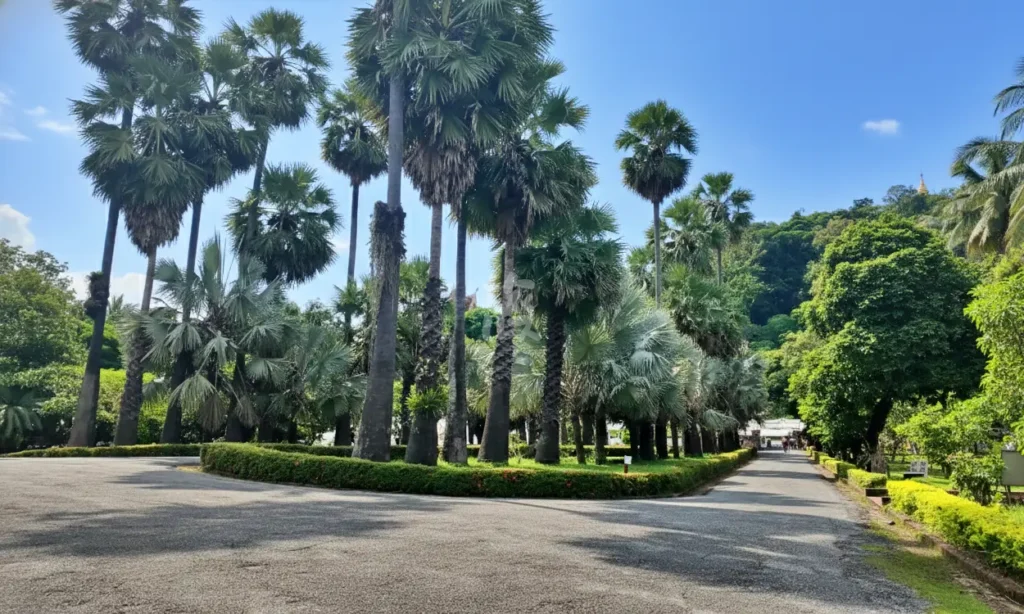
The National Museum compound covers about 37,000 m², and the palace is only one part of it.
Even if the palace interior feels “enough” after a while, there are still several interesting spots in the grounds.
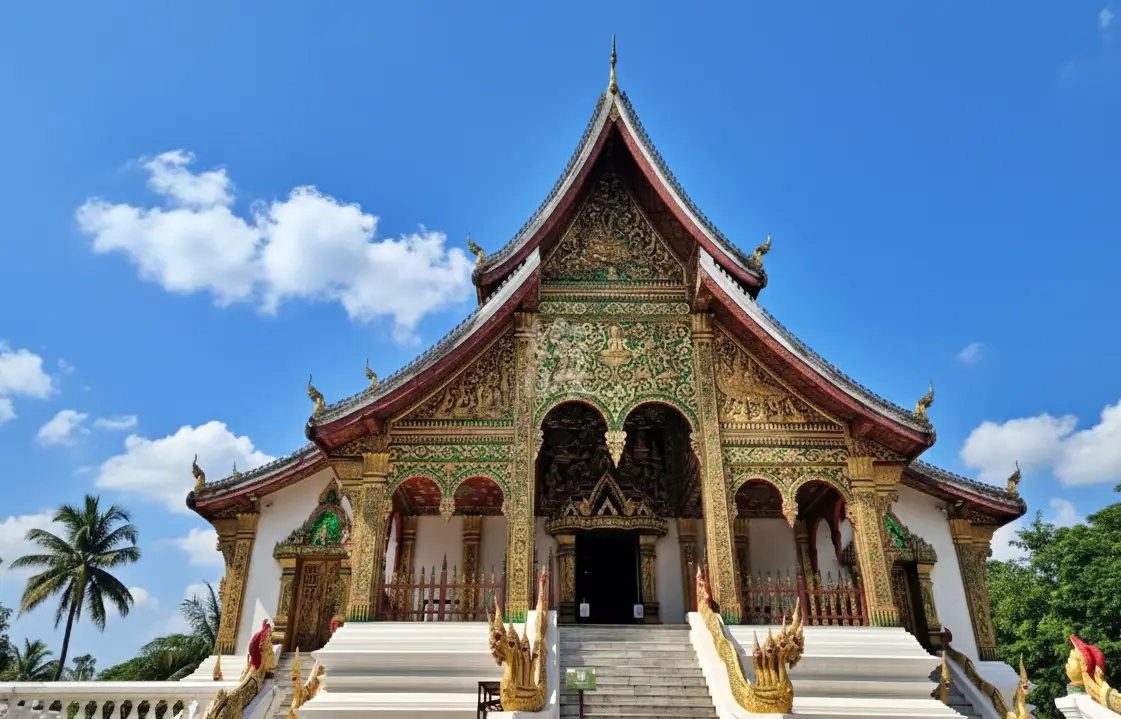
Pra Bang Shrine (Haw Pha Bang)
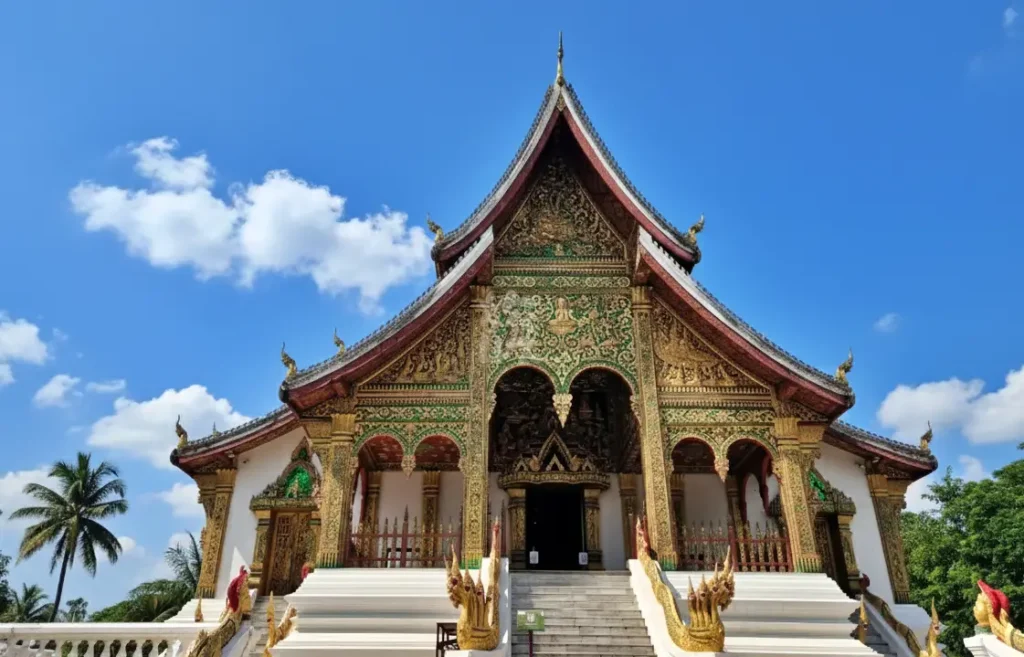
This temple was built to house the sacred Pra Bang image, Luang Prabang’s protective Buddha.
It sits close to the main street, so you’ll likely notice it while walking around town.
Compared with other temples in the city, its beauty really stands out.
The exterior is decorated with a rich emerald-green inlay that looks especially striking from straight in front of the building – this is the most photogenic angle.
Inside, when it is open, the space is richly golden and very ornate.
Whether the interior is open to visitors can vary, but if it happens to be open while you’re there, it’s well worth stepping inside.
\See the museum, Phousi Hill and the Night Market in one easy highlights tour./
Classic car garage
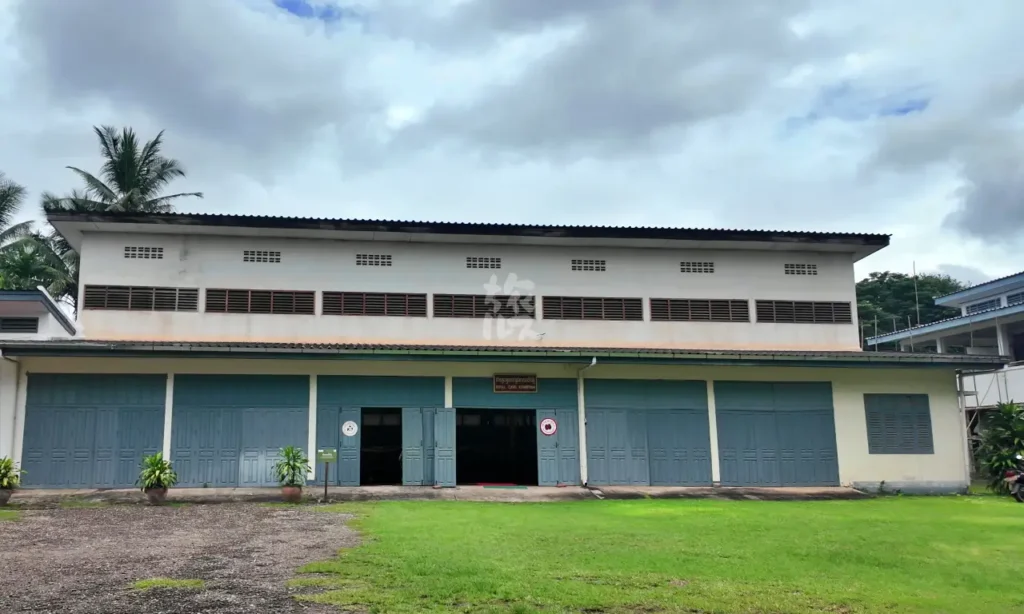
Behind the former palace there is a garage displaying several of the cars used by the royal family.
You’ll find mid-20th-century luxury vehicles such as a Lincoln Continental, Ford Edsel and a Citroën DS sedan – about five cars in total.
For a small country that was still developing at the time, these cars symbolised the modern future the Kingdom of Laos was hoping for.
Seeing them parked here, in a town that still feels very calm today, gives a slightly bittersweet feeling of “what might have been”.
Photography is also prohibited inside this garage, so you’ll have to enjoy the shapes and details with your eyes only.
Royal Theatre (Royal Theatre / “Phra Lak Phra Lam” Theatre)
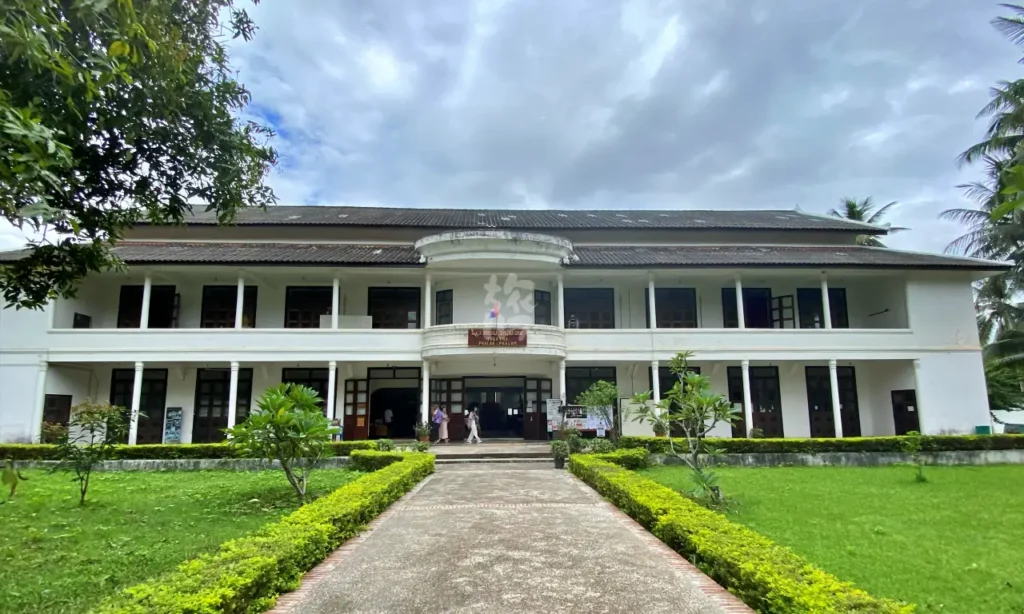
王立劇場の外観 The Royal Theatre building was originally the official reception hall for the royal family.
Today it serves two functions: it houses the free lockers used by museum visitors, and it operates as a theatre for traditional performances of “Phra Lak Phra Lam”, the Lao version of the Indian epic Ramayana.
Performances are held on specific days of the week: Monday, Wednesday, Friday and Saturday evenings, starting at 18:00 from October to February and at 18:30 from March to September (around one hour long).
If you can fit it into your schedule, watching the show makes for a very atmospheric hour before dinner.
The combination of music, costumes and storytelling adds another layer to what you saw earlier in the palace and the mosaic scenes.
Why is the National Museum a perfect first sightseeing stop in Luang Prabang?
Because the Luang Prabang National Museum sits right on the main street, it works very well as a starting point for exploring the city.
You can visit it on your first morning, then naturally move on to other nearby sights such as Mount Phousi and the Night Market.
It’s also a good emotional “starter”.
This isn’t the kind of museum that takes a full day and leaves you exhausted – most visitors can see the palace interior and grounds comfortably in one to two hours, then continue to wander the town.
For me, the real value of this museum wasn’t only the objects behind glass, but the feeling of standing in the red-and-gold Throne Hall and quietly sensing the life of the royal family who once lived here.
You can’t take photos inside, but that forces you to slow down and really look; the memories stay in your head rather than your camera roll.
At the same time, you do need to plan a little: there is a lunch break, photography is forbidden, and the palace closes relatively early.
If you check the opening hours in advance, dress modestly and aim to avoid tour groups, your visit will be much calmer and more enjoyable.
It’s not flashy luxury with marble and chandeliers – it’s the quiet kind, where you walk barefoot across wooden floors, step out onto the balcony, and for a moment it feels like the palace grounds and the town beyond belong just to you.
If that’s the type of experience you like, this museum will make you happy; if you prefer high-energy activities and constant stimulation, you may want to keep your visit short and combine it with other stops nearby.
Tabilus – Go Travel, Go Missing
\See the museum, Phousi Hill and the Night Market in one easy highlights tour./
\ Check out the full list of Luang Prabang sightseeing guides here! /



Comments