
This post may contain affiliate links. If you use them to buy something, I may earn a commission at no extra cost to you.
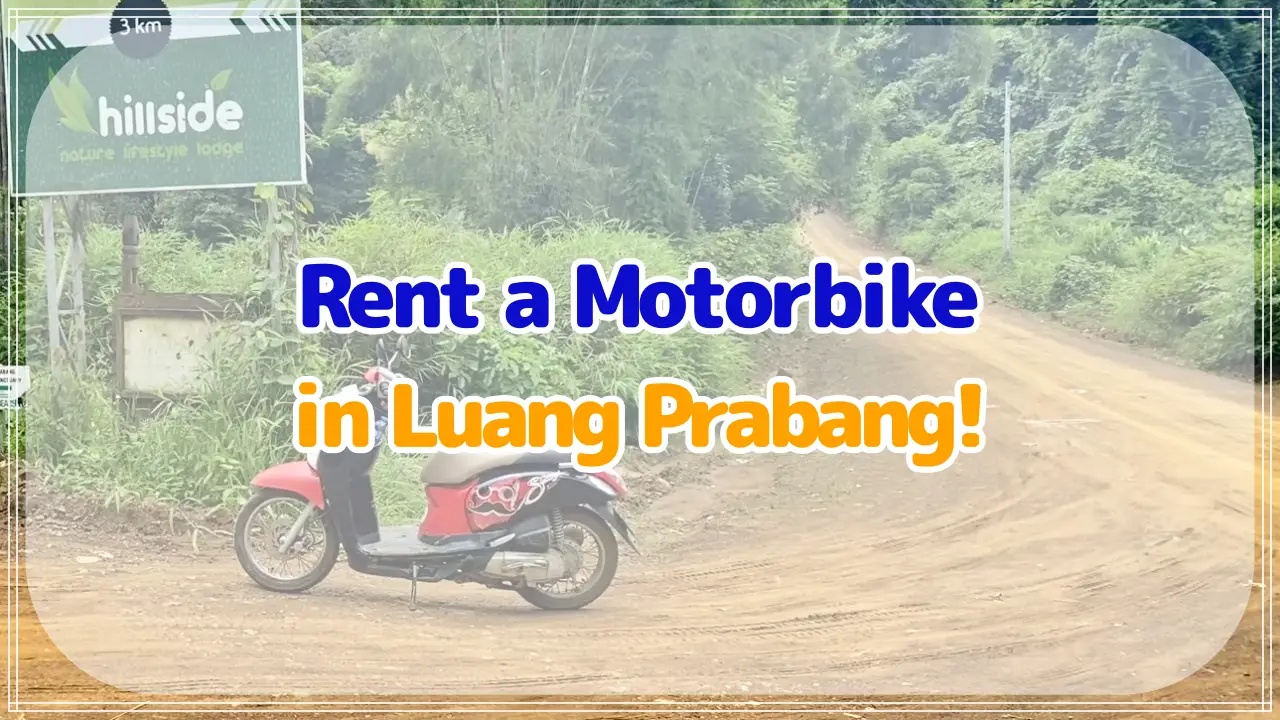
Renting a motorbike in Luang Prabang is one of the easiest ways to turn a small, walkable town into a much bigger adventure.
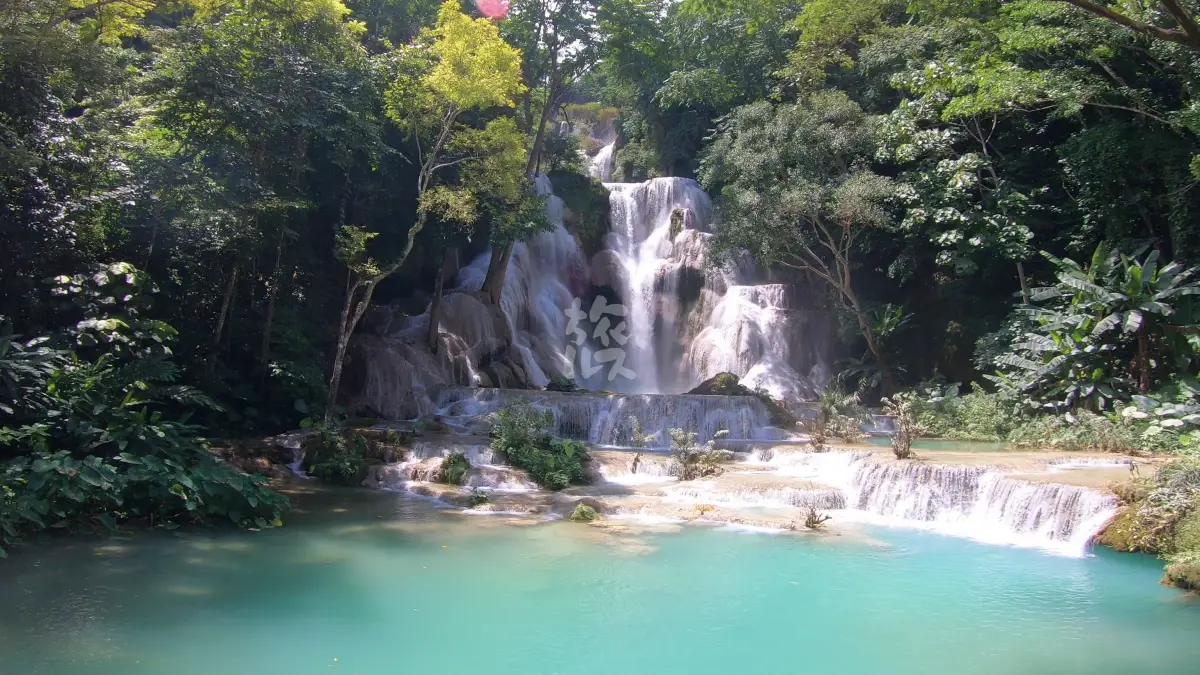
Within bicycle distance the town is charming enough, but with a bike you can suddenly reach waterfalls, viewpoints, and quiet villages on your own schedule.
In this guide I’ll walk you through how traffic works in Luang Prabang, how to rent a bike step by step, what to check before you ride, and what to do if something goes wrong.
I’ve rented bikes here myself, and the first time I was nervous too.
Even if you’ve never rented a motorbike abroad before, Luang Prabang is one of the easier places to start—as long as you respect the risks and follow the basics.
If that kind of slow, independent exploring sounds like your style, this guide is for you.

Is it safe to ride a motorbike in Luang Prabang?
Traffic rules and driving style are different in every country, and Laos is no exception.
Even within Laos, Luang Prabang and the capital Vientiane feel quite different on the road.
The first thing that surprises many people: there are no traffic lights in Luang Prabang.
Intersections are handled by people watching each other and taking turns.
That sounds chaotic, but in reality the traffic volume is low and most people drive slowly, so it works.
Local riders don’t usually speed and they won’t aggressively tailgate you just because you’re going slowly.
You don’t need to ride fast to “keep up” here.
When I stayed in Luang Prabang and rode a bike every day, what struck me most was how relaxed the traffic felt compared to big cities in Southeast Asia.
You still need to stay alert, but you don’t feel constantly hunted by trucks and buses.
Four things to watch out for when riding a motorbike in Luang Prabang
1. Laos drives on the right
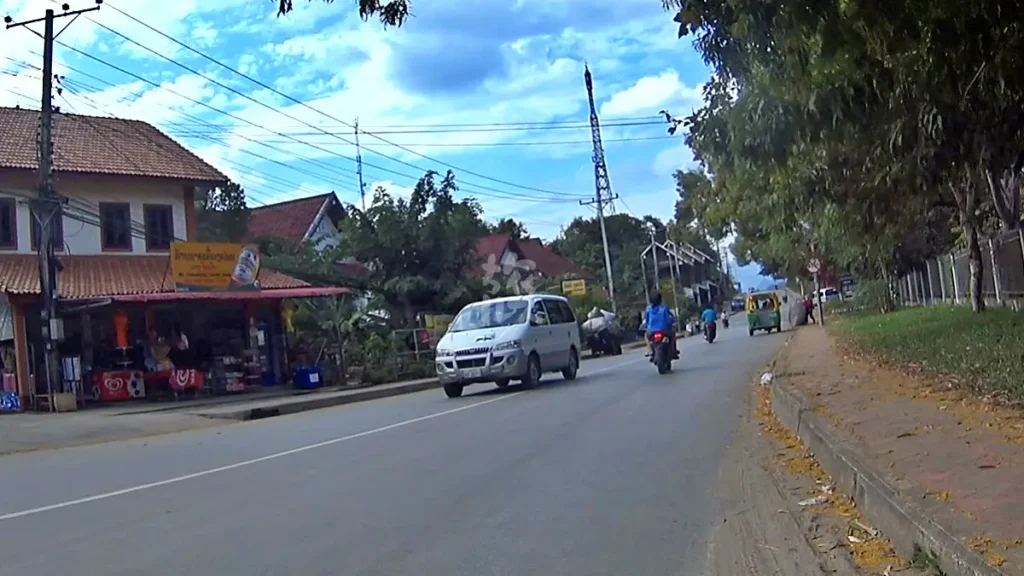
In Laos, cars and motorbikes drive on the right side of the road.
If you’re used to Japan or the UK, this feels backwards at first.
The easiest way to adjust is to follow the flow of traffic in front of you for a while and copy what they do, especially at turns and roundabouts.
2. Road conditions outside town can be rough
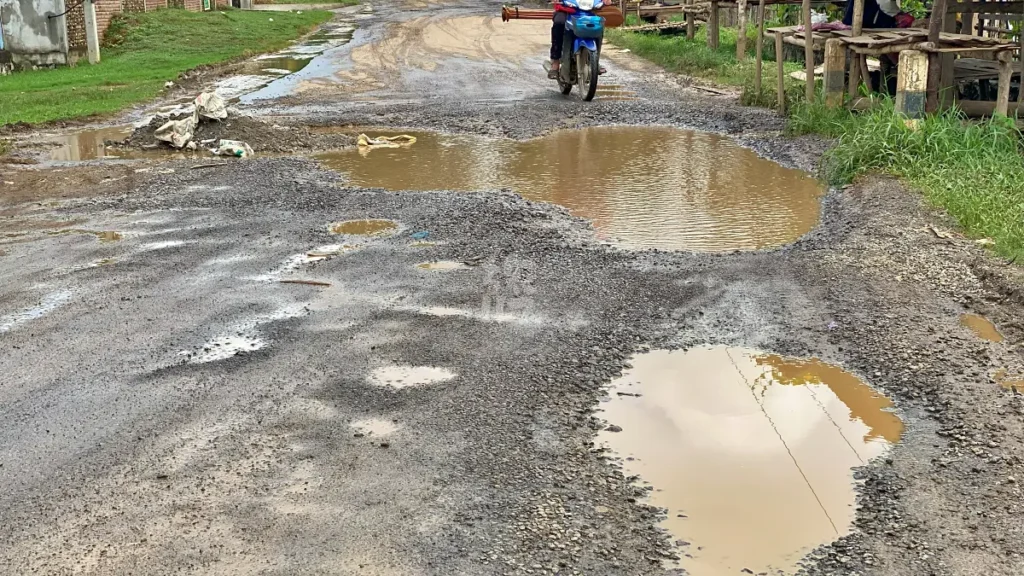
As soon as you leave the central streets of Luang Prabang, the road surface can change suddenly.
Paved roads may be full of potholes, or turn into unpaved dirt roads with loose gravel.
In the rainy season, puddles, mud, and soft, slippery patches appear everywhere.
Road conditions outside the town center can be very poor, especially in the rainy season, so ride slowly and be ready for surprises.
In rainy season, it’s absolutely reasonable to decide not to ride a motorbike at all.
The risk is simply higher, especially if you’re not an experienced rider.
3. One-way streets… and people riding the wrong way
Luang Prabang has many one-way streets.
Visitors tend to take “one-way” very seriously and always follow the sign.
Locals, however, don’t always treat it as strict law.
You’ll see bikes coming the wrong way down one-way streets, especially short stretches.
If you’re not paying attention, it’s easy to have a head-on near miss.
Even on signed one-way roads, never assume all traffic will be going in the same direction.
Check both directions before pulling out or overtaking.
4. Always wear a helmet (even if locals don’t)
In Luang Prabang, many locals still ride without helmets.
Watching that, you might feel tempted to do the same—but it’s a terrible idea.
In case of an accident, hospitals in Luang Prabang are basic and not particularly reassuring.
Always wear a helmet, even if almost everyone around you is riding without one.
You’re protecting your own head, not copying local habits.
If you’re worried about hygiene because many people have used the same rental helmet, an inner cap is a simple solution.
A thin cool-type inner cap makes it feel much cleaner under the helmet.
How to find a motorbike rental shop in Luang Prabang
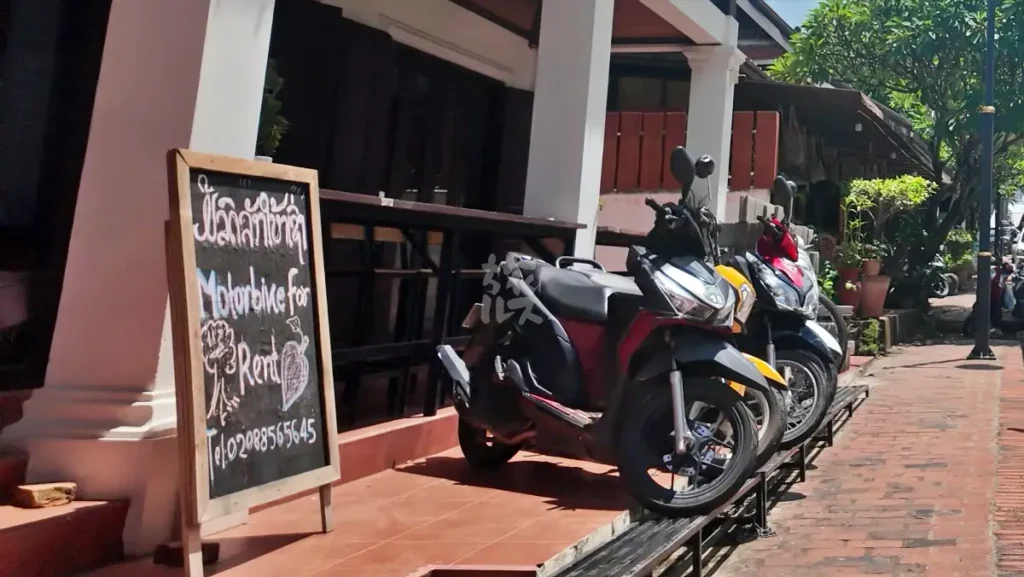
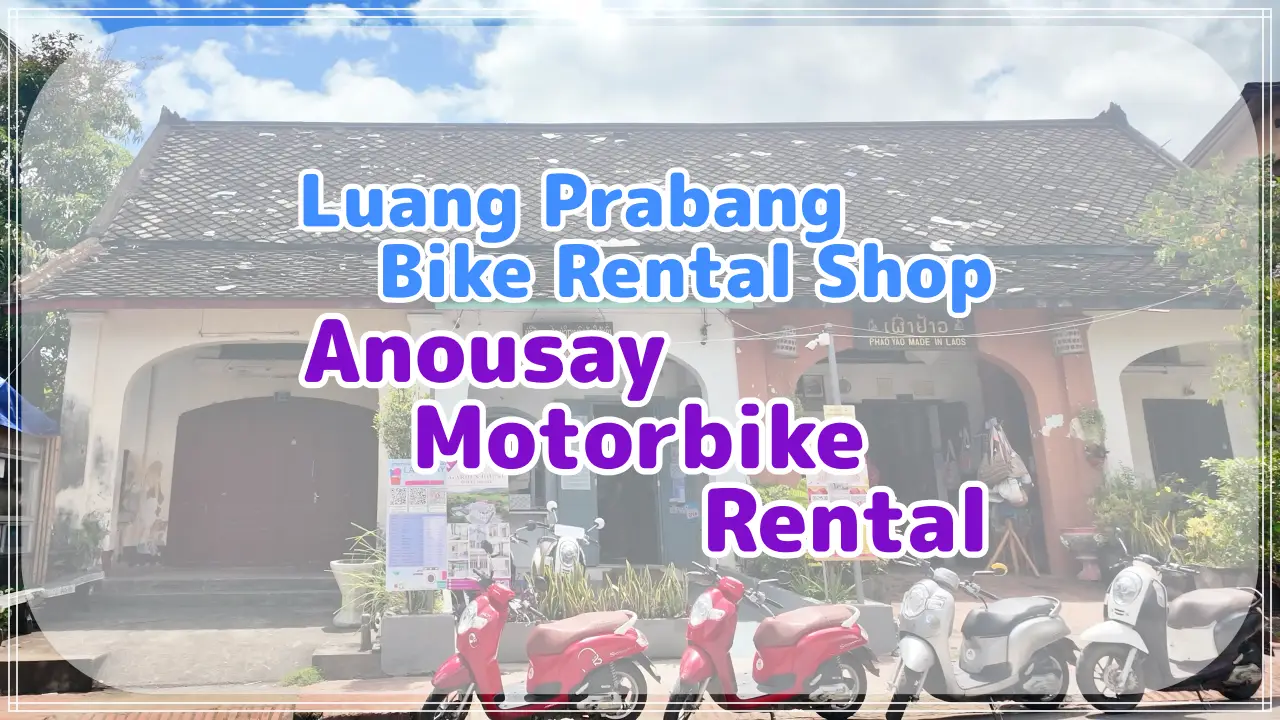
There are plenty of rental shops in Luang Prabang.
You’ll usually see a sign like “bike for rent” and several bikes lined up in front.
If you’re not sure where to go, ask the staff at your hotel for the nearest rental shop.
For most travelers, the closest shop to your hotel is perfectly fine.
Keep in mind that each shop has different models.
Some places only rent a single type of bike.
If you don’t find anything you like, just walk to another shop and compare—they’re usually not far apart.
\Planning waterfall runs and mountain roads? Check 125cc+ motorbike options here!/
Step-by-step: how to rent a motorbike (6 easy steps)
Once you’ve found a rental shop, the process is simple.
You basically go through these six steps with the staff.
Six steps to renting a motorbike in Luang Prabang
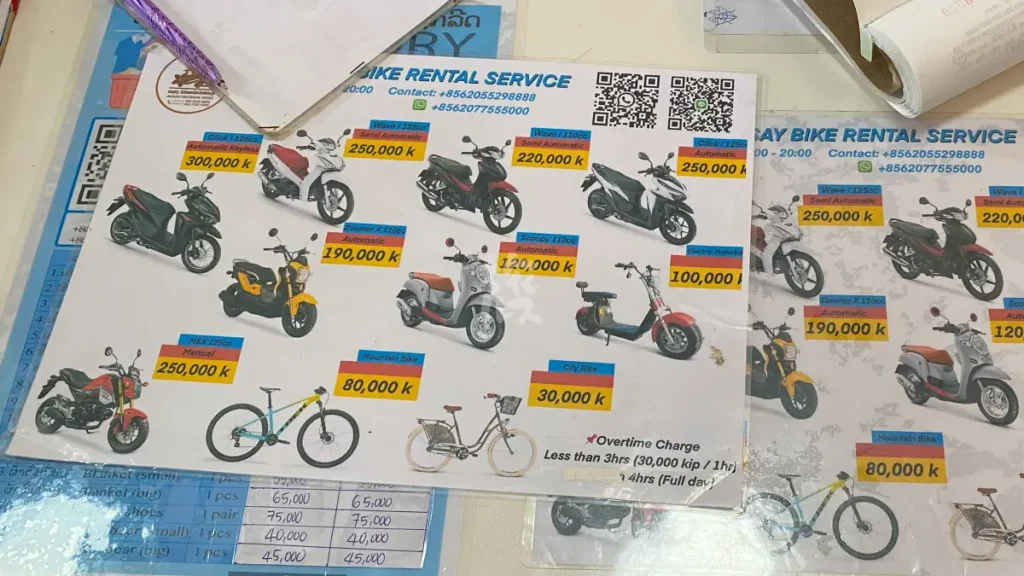
For most people, price is the first concern.
Rental prices depend on things like engine size, brand, and season.
If you don’t care about brand or power, the cheapest model is usually enough.
Recently, electric bikes have become more common in Luang Prabang.
For riding just around the town, an electric bike can work well.
However, if you plan to visit multiple out-of-town spots or rent for several days, choose a petrol (gasoline) bike instead.
With an electric bike, once the battery runs down, that’s it—you can’t just quickly refuel and continue.
It’s not ideal for long distances.
Motorbike rentals are usually counted in 24-hour blocks.
Some shops might offer shorter options, like three hours or a half day, but that depends entirely on the shop.
If you decide in advance exactly when you’ll return the bike, the paperwork goes quickly.
Also think about the shop’s closing days.
If your planned return date falls on the shop’s day off, it’s simpler to choose another rental shop from the start so you don’t have to adjust your travel plan.
There are lots of rental shops in town, so you can prioritize the schedule you really want.
Once you’ve chosen the bike and the rental period, you’ll sign the rental agreement.
If there’s anything you don’t understand, ask before you sign.
Then double-check the total price before paying.
Make sure you receive a copy of the agreement or a receipt, and keep it somewhere safe.
You’ll need it when you return the bike.
In case something unexpected happens—the bike breaks down, or you’re involved in an accident—you’ll need to contact the shop quickly.
Check the phone number printed on the agreement or receipt and confirm with the staff that this is the emergency contact.
If you can, also ask what hours they usually pick up the phone.
More and more shops now exchange contact details via apps like WhatsApp or other social media.
Don’t hesitate to add them—you’ll be glad you did if something goes wrong.
Across Laos, it’s standard for rental shops to hold your passport as a deposit when you rent a motorbike.
To be honest, it doesn’t feel great to hand over your passport, but in practice you generally have to accept this if you want to rent a bike.
If you really don’t want to leave your passport, renting a motorbike in Laos will be very difficult.
Before you hand it over, take a photo of the photo page with your phone.
Hotels in Laos often ask to see your passport at check-in, and a clear photo is usually enough.
Before you ride away, check the bike while the staff is watching.
If there’s any issue, you can switch to another bike on the spot.
- Does the engine start smoothly?
- Do the brakes work properly?
- Do the headlight and indicators turn on?
The lights are easy to forget, especially if you don’t plan to ride after dark—but still check them just in case.
Then carefully inspect the bike for existing damage.
This is to avoid being blamed for scratches and dents you didn’t cause.
A good trick is to record a 360° video of the bike with your phone, in front of the shop staff.
That way it’s very clear what condition the bike was in when you took it, and it quietly signals that you’re not an easy target.
How to look after your motorbike while you have it
While you’re renting, you’re fully responsible for the bike.
Take basic precautions so nothing happens.
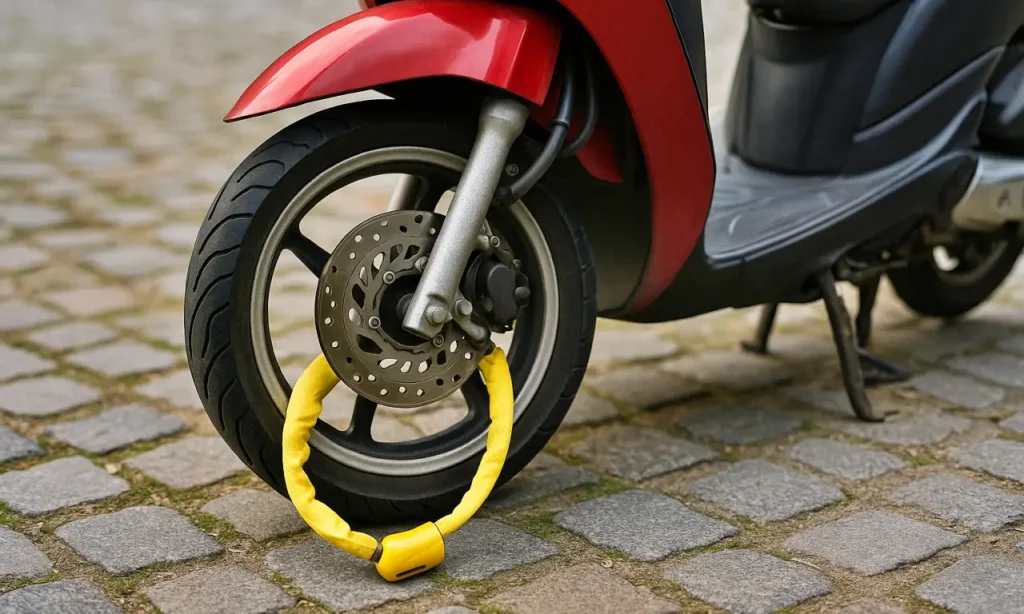
Whenever you park, don’t just remove the key—always use the extra lock that comes with the bike.
Shops will lend you a wheel or frame lock together with the bike; use it every time you leave the bike unattended.
Always park inside your hotel grounds at night
In Luang Prabang, you’ll see cars parked on the street overnight.
Sometimes hotel parking space for bikes is small, and you might think it’s easier to leave the bike just outside on the road.
That’s not a good idea.
Recently there have been cases of cars being broken into in Luang Prabang, and bikes left on the street at night are also at risk.
Always park your motorbike inside your hotel property at night if at all possible.
I’ve personally had a problem: one night I left a bike on the street for just a short time, and when I came back the petrol had been siphoned out.
At night, when there are fewer people around, the risk goes up a lot.
How to return your rental motorbike (4 steps)
Returning the bike is simple if you follow the shop’s rules.
Four steps to returning your motorbike
Bring the bike back to the shop where you rented it, during their business hours.
As long as you’re within the rental period, it usually doesn’t matter what time you return it—but watch out for late returns.
Rental periods are generally counted in 24-hour units from the time you picked up the bike.
Late fees are often charged by the hour, and they can be quite expensive.
Set a simple alarm on your phone for an hour before your return time so you’re not surprised by an expensive extra bill.
When you return the bike, the staff will inspect it.
If they find damage that wasn’t there when you rented it, they may charge you for repairs.
This is exactly why you checked and recorded the bike’s condition at the start.
After the bike check, show the copy of the rental agreement or your receipt.
If there are any late fees, you’ll pay them at this point.
Finally, you’ll get your passport back and the rental is complete.
Right there in the shop, open the passport and check it:
- Is it actually your passport?
- Are there any torn or damaged pages?
It only takes a few seconds and can save you a big headache later.
What to do if you have an accident with your rental motorbike
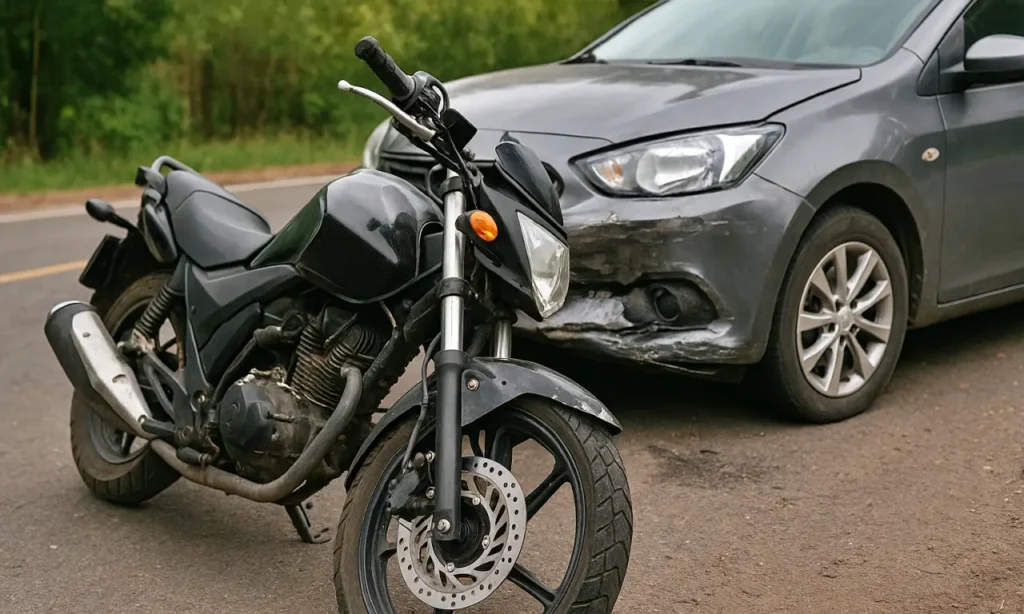
If you’re unlucky and have an accident, don’t try to handle everything yourself.
Contact the rental shop and your travel insurance as soon as you can.
First, call the rental shop
If you crash, immediately contact the rental shop and ask how they want to handle things.
If you’re in or near Luang Prabang city, someone from the shop may come to the scene.
They can also help you deal with the police.
If you or someone else is injured, tell the shop clearly that you need help getting to a hospital or arranging an ambulance.
In Laos, you should assume that police and hospital staff may not speak English very well.
Rental shop staff are much more likely to speak English, so having them in the middle usually makes everything smoother.
It’s perfectly fine to use a translation app on your phone to communicate with the shop.
Then, contact your travel insurance company
If you’ve been injured and you have overseas travel insurance, contact your insurer and ask how to proceed.
For many travelers from Japan, this is one of the few moments when it feels great to be able to speak to someone in Japanese and get calm, clear instructions.
If you plan to rely on the travel insurance attached to your credit card, make sure you have the emergency contact number for that card’s insurance written down or saved somewhere before your trip.
\Check EKTA’s travel insurance plans here/
\Browse plans on VisitorsCoverage/

What travel insurance usually covers (and doesn’t) for motorbike accidents in Laos
For most overseas travel insurance policies you can buy, coverage for motorbike accidents in Laos is very limited.
Typically, you can only expect coverage for your own injuries—your medical treatment.
This is also true for the overseas travel insurance that comes with many credit cards.
If you injure someone else or damage someone’s property while riding a rental motorbike, that is usually outside the coverage.
If you damage or destroy the rented bike itself, that’s also not normally covered.
So if you crash a rented motorbike, your own treatment may be covered by insurance, but you should not expect any coverage for third-party injury, property damage, or the bike itself.
Because of that, ride with maximum caution.
And of course, if you ride without a valid licence, any treatment costs for your own injuries in an accident will not be covered.
If you’re planning to rent a motorbike in Laos, carry an international driving permit and your home-country licence with you.
Is renting a motorbike in Luang Prabang right for you?
If you want to visit several out-of-town spots in one day and enjoy the freedom to stop whenever you like, a rental motorbike can make your Luang Prabang trip much richer.
If, on the other hand, you’re nervous about rough roads, right-side driving, or the limited insurance coverage, it’s perfectly fine to skip it and use tuk-tuks or hired cars instead.
When I think back on my own rides here, the best memories aren’t about “speed” at all.
It’s things like parking by the river at sunset and just listening to the town calm down.
It’s not flashy luxury—it’s the quiet kind, where you pull over by the riverbank and feel like the view is yours for a while.
If that kind of slow, unhurried exploring appeals to you, renting a motorbike in Luang Prabang is likely to feel deeply rewarding.
If it doesn’t, you’ll probably enjoy the town just as much from the back of a tuk-tuk.
Comments