This post may contain affiliate links. If you use them to buy something, I may earn a commission at no extra cost to you.
Vientiane is often dismissed as a capital with little to see, especially compared with Luang Prabang or Vang Vieng.
After visiting for myself, I would say there are fewer major sights—but that does not mean there is nothing worth seeing.
For the main attractions, I personally think two days in Vientiane is enough.
In this guide, I will share six places I recommend, along with practical ways to get around and the best time to visit.
Is Vientiane Worth Visiting, and How Many Days Do You Need?

Vientiane does not have the long list of tourist attractions you might expect from a national capital.
Compared with Luang Prabang or Vang Vieng, there are simply fewer places to visit.
In a way, that makes sightseeing easier.
With fewer major attractions competing for your time, the places you really want to see become fairly clear.
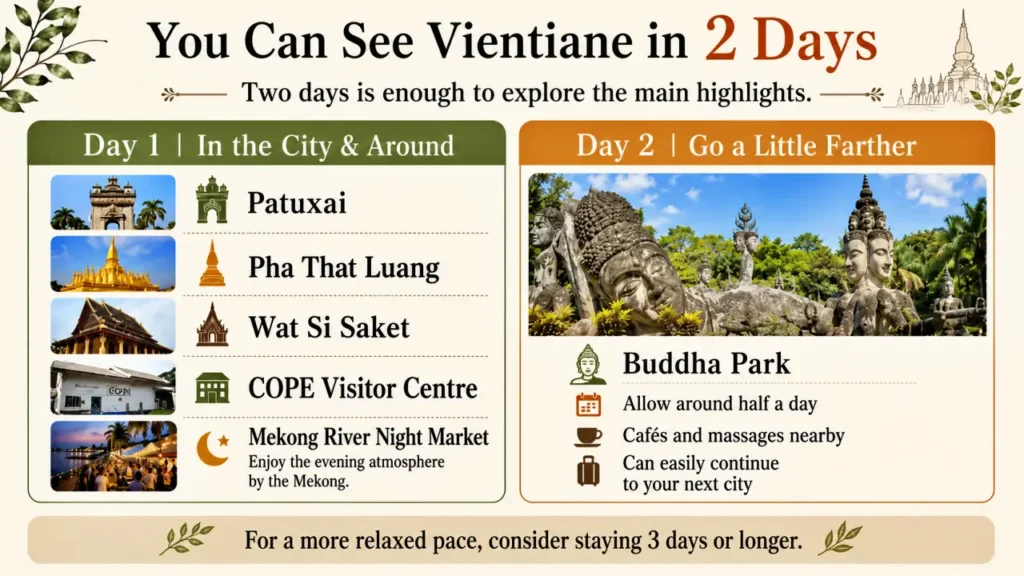
For the main sights, I personally think two days in Vientiane is enough.
With one day, you can visit places such as Patuxai, Pha That Luang, and Wat Si Saket, then walk along the Mekong and enjoy the night market in the evening.
A second day makes it much easier to fit in Buddha Park, which is outside central Vientiane.
Of course, Vientiane also has cafés and massage shops, so staying for three days or longer can work well if you prefer to slow down.
But if sightseeing is your main reason for traveling around Laos, my honest feeling is that you do not need to spend a long time in Vientiane before moving on to Vang Vieng or Luang Prabang.
If you are visiting several cities in Laos, saving more time for the rest of your route may give you a wider range of experiences.

6 Best Things to Do in Vientiane
1. Patuxai — Start with Vientiane's Landmark

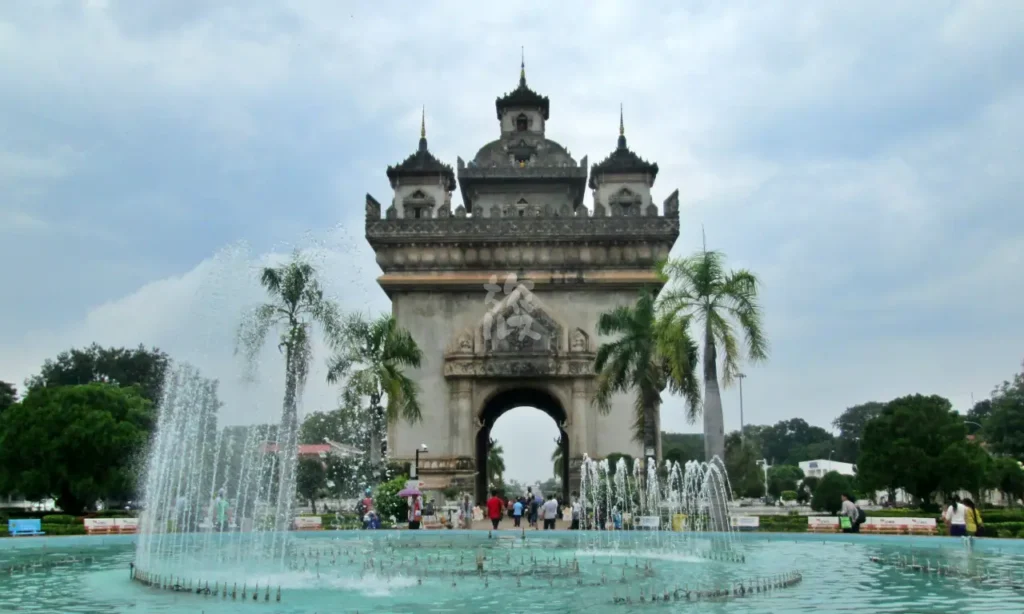
The first place I recommend in Vientiane is Patuxai, one of the city's best-known landmarks.
Its Lao name means "Victory Gate," and from a distance, the monument may remind you of the Arc de Triomphe in Paris.
What I find interesting is the historical contrast: the building looks distinctly French-inspired, yet it commemorates people who fought for independence from France.
I like the irony of that.
Once you get closer and look up, though, you will notice Lao-style decoration across the ceiling and the structure itself.
It gives Patuxai a very different character from a European monument.
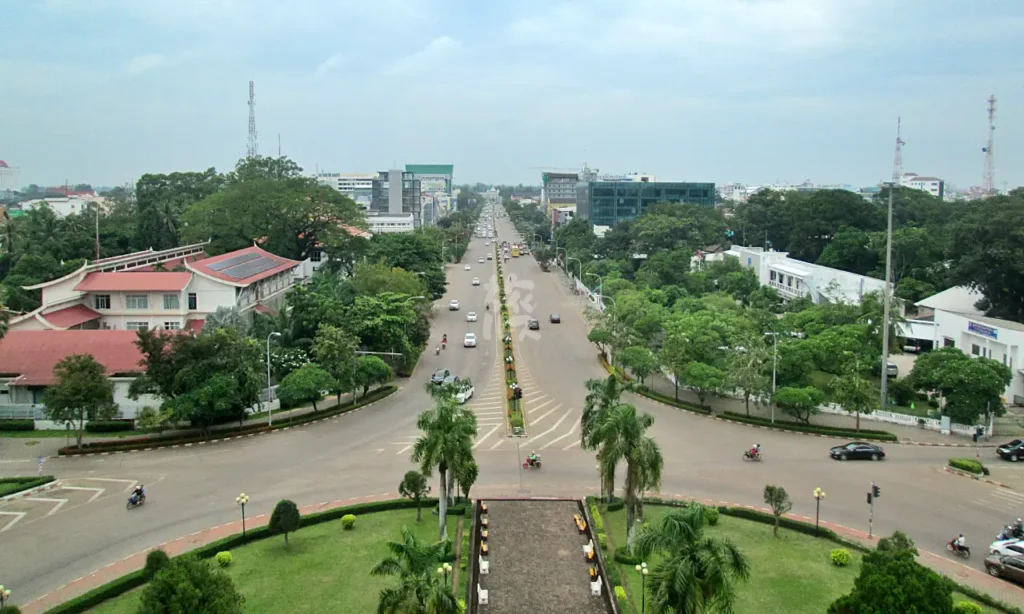
One of the main reasons to visit is that you can climb inside Patuxai and look out over Vientiane from above.
From the top, you can see the city's relatively low-rise skyline.

Looking out over Vientiane, you may find yourself wondering, for a moment, whether this really feels like the capital of a country.
Patuxai is also lit up at night, so it is worth seeing after dark as well as during the day.
| Address | Ave Lane Xang, Vientiane, ラオス |
| Opening hours | 8:30 a.m.–5:00 p.m. |
| Entrance fee: | 30,000 kip for foreign visitors 5,000 kip for Lao visitors |

2. Pha That Luang — The Golden Symbol of Laos

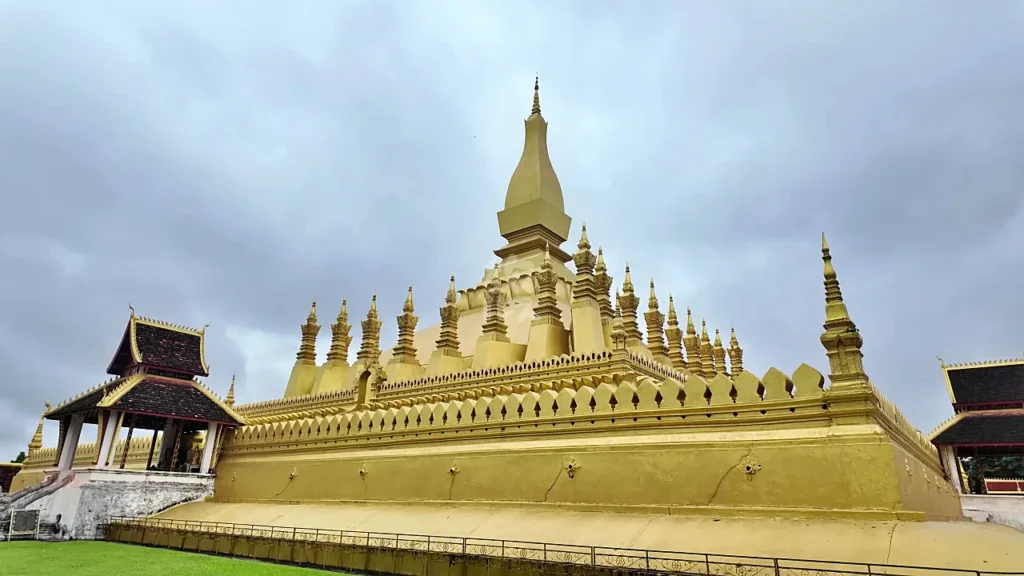
Another landmark that represents Vientiane is Pha That Luang.
The name "That Luang" means "Great Stupa," and it is regarded as a national symbol.
According to tradition, a relic believed to be part of the Buddha's breastbone is enshrined here, giving the site particular significance in Lao Buddhism.
Pha That Luang is not simply one more temple among the many in Vientiane.
It holds a particularly important place in Laos.
The large golden stupa is the obvious highlight, but it is not the only thing to see.
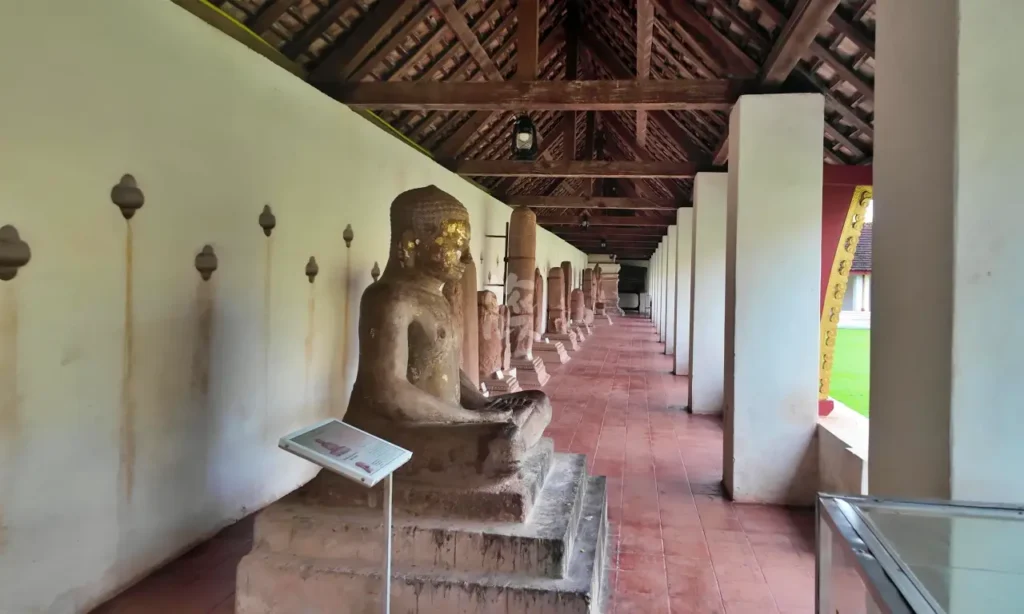
In the surrounding cloister, you can also find Buddha images and artifacts that give you a sense of the site's history.

There are several other temples and large Buddhist buildings around Pha That Luang as well.
To the south, Wat That Luang Tai has a large reclining Buddha.
It is within walking distance, so the two are easy to visit together.
Pha That Luang is a little outside the city center, so a ride-hailing app, tuk-tuk, or sightseeing tour is worth considering.
| Address | That Luang, Xaysettha 10009, Laos |
| Opening hours | 8:00 a.m.–5:00 p.m. |
| Entrance fee: | 30,000 kip for foreign visitors 5,000 kip for Lao visitors |
3. Buddha Park — The Most Unusual Stop on This List

If you want somewhere a little different from a standard temple visit, Buddha Park is well worth considering.
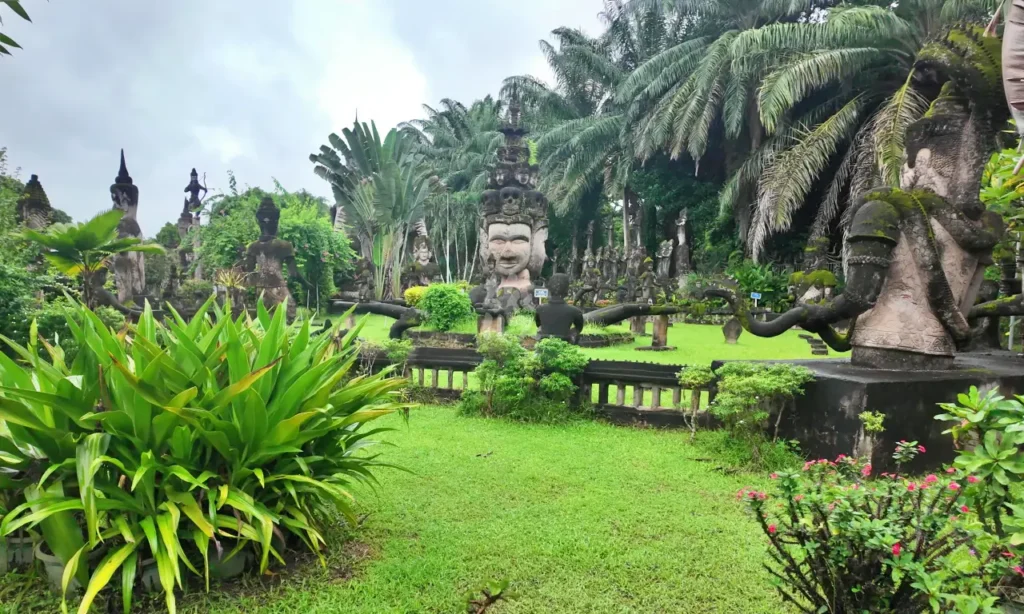
More than 200 statues of different sizes fill the park, including Buddhist figures and statues connected with Hinduism.
Together, they create a strange and highly distinctive atmosphere.
Honestly, the style may not appeal to everyone.
But if you enjoy unusual, chaotic, and unconventional places, Buddha Park is probably a much better fit for you.
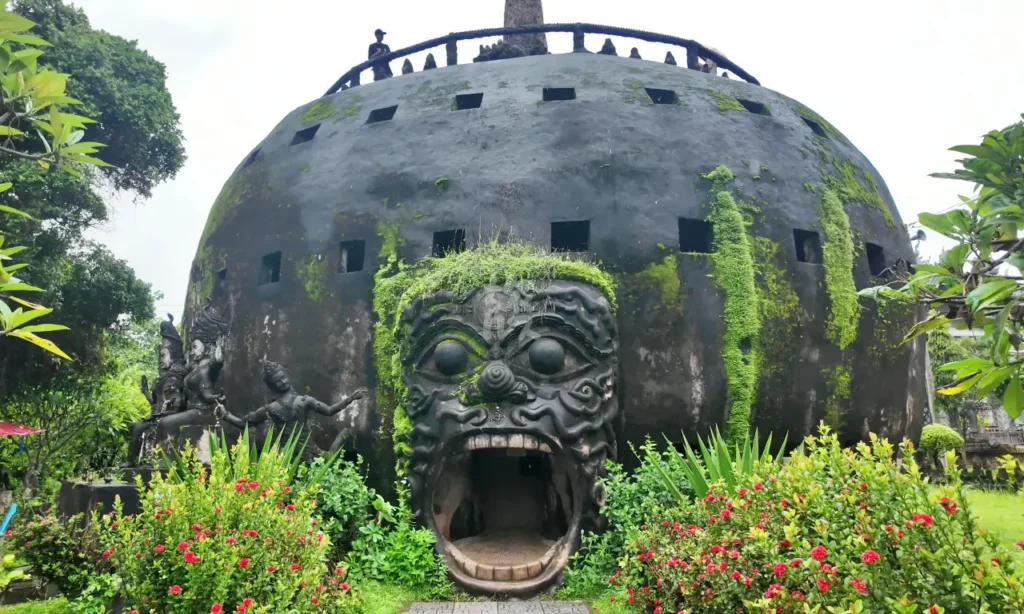
A particular highlight is the pumpkin-shaped structure with an entrance that looks like a demon's mouth.

Step through the mouth and the interior is divided into three levels representing hell, the earthly world, and heaven.
You can climb all the way to the top.
From the roof, you get a view across the entire park.
Buddha Park is outside Vientiane and farther from the city center than Pha That Luang.
Plan on setting aside around half a day for Buddha Park, including the round trip.
I have covered Buddha Park in more detail in a separate guide, including how to get there.

| Address | Deua, Thanon Tha, Vientiane, Laos |
| Opening hours | 8:00 a.m.–5:00 p.m. |
| Entrance fee: | 60,000 kip for foreign visitors 15,000 kip for Lao visitors |
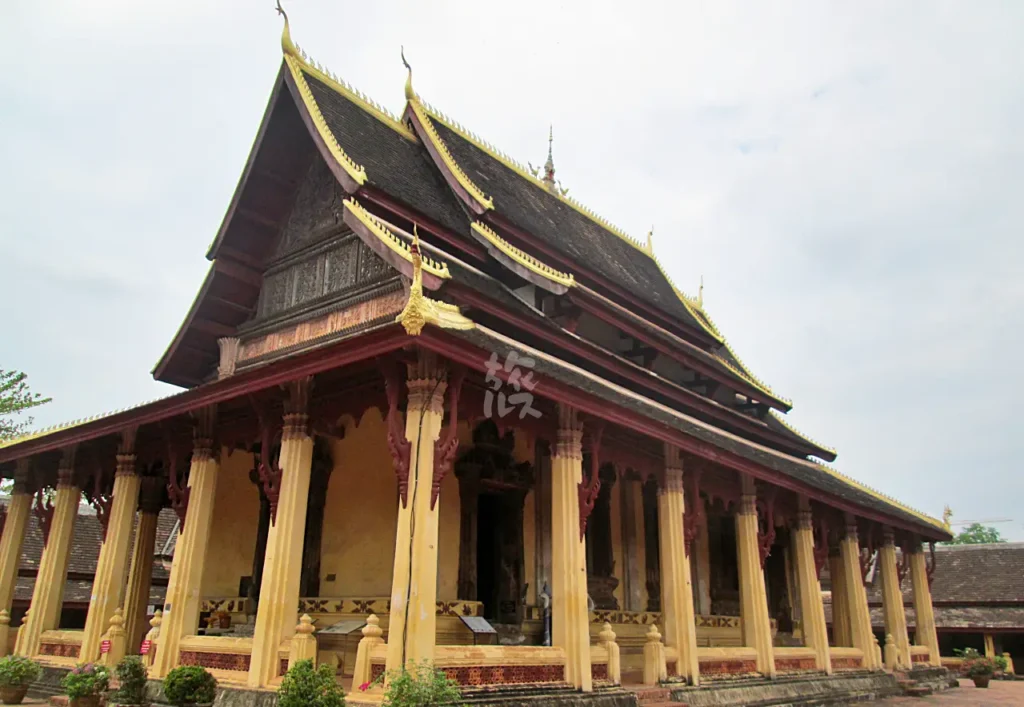
4. Wat Si Saket — My First Choice If You Visit Only One Temple

Vientiane has many temples, but Wat Si Saket is the one I particularly recommend.
It is opposite the Lao Presidential Palace and is easy to include in a sightseeing route around central Vientiane.
If I had to choose just one temple to visit in Vientiane, Wat Si Saket would be my first choice.
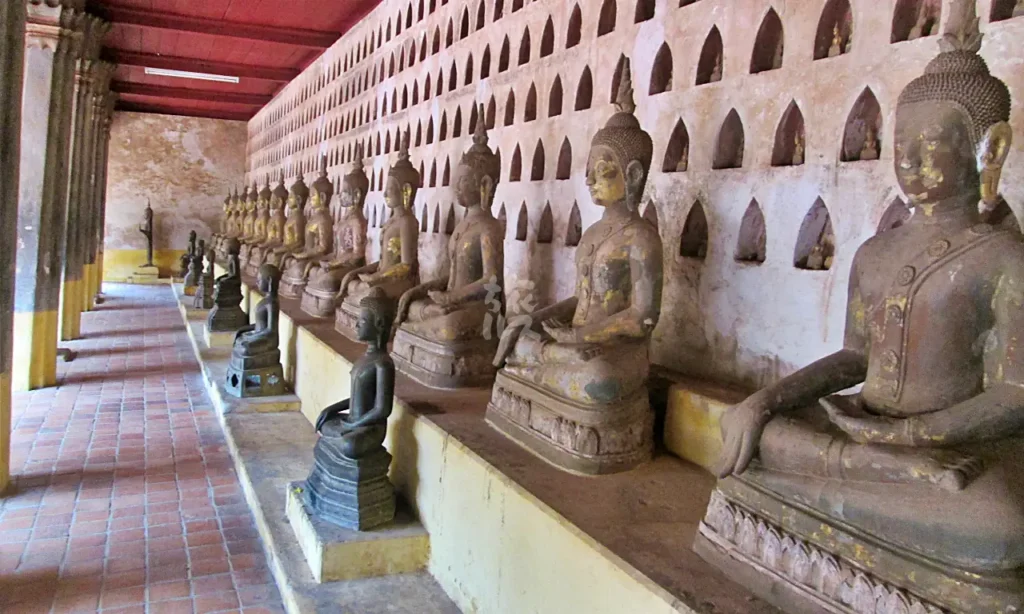
The grounds contain 6,840 Buddha images, and the number alone gives the temple a strong visual impact.
What stayed with me most was the long cloister filled with Buddha images.

There are larger statues as well as many small ones, and you can slowly walk through the quiet grounds while taking them in.
A golden Buddha is housed inside the main hall.
Photography is not allowed inside the main hall, so this is one part of the temple you will need to see with your own eyes.
Wat Ho Phra Keo, which was originally built as a royal temple, is also very close to Wat Si Saket.
Its gardens are pleasant, so visiting the two together is a good option.
| Address | Ave Lane Xang, Vientiane, Laos |
| Opening hours | 8:00 a.m.–12:00 p.m. and 1:00 p.m.–4:00 p.m. |
| Entrance fee: | 30,000 kip for foreign visitors 5,000 kip for Lao visitors |
5. Vientiane Night Market — Come for the Evening Atmosphere by the Mekong

If you are looking for somewhere to go in the evening, head toward the night market along the Mekong River.
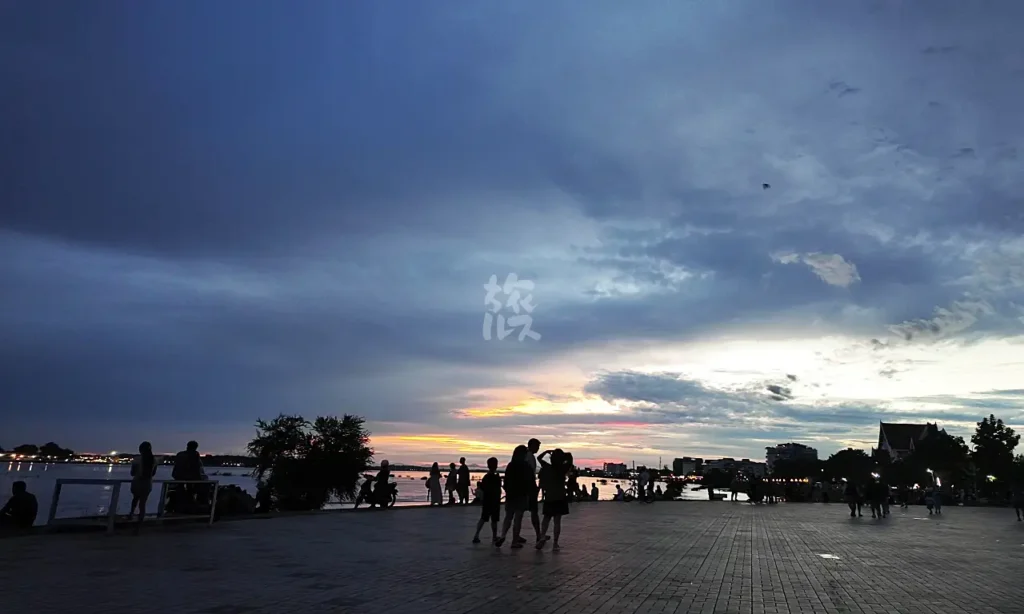
As the sun begins to go down, more people gather around Chao Anouvong Park and the riverfront.
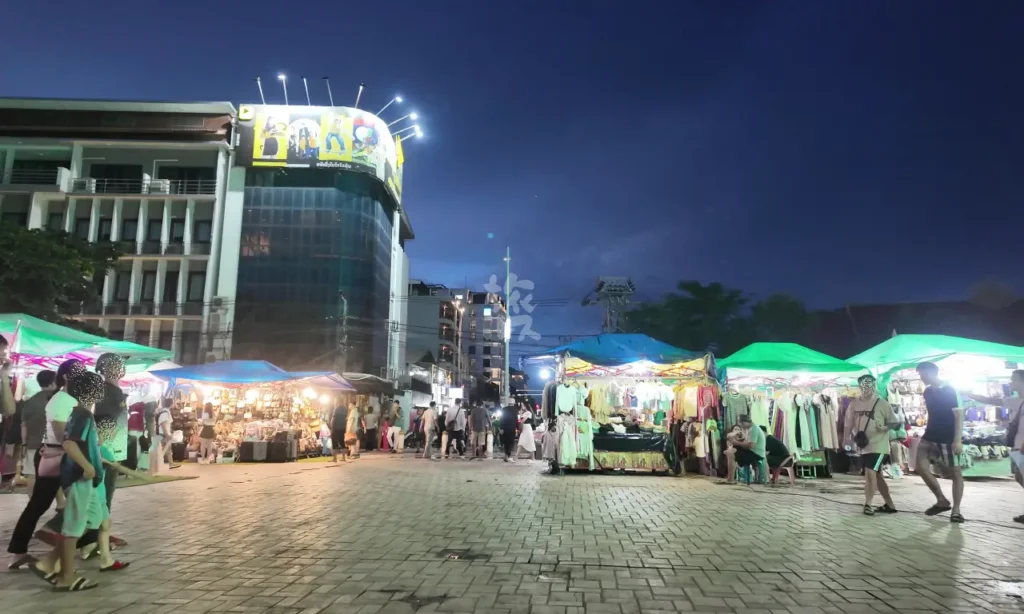
The night market felt more local than tourist-focused to me, with many stalls selling clothes and everyday items rather than products aimed mainly at visitors.
There are a lot of stalls and plenty of people, and that is exactly what gives the area its festive energy.
Move a little away from the main stretch and you can also find food stalls.
The whole area can feel like a small festival happening every day.
For me, though, the night market is not only about browsing the stalls.
Walking along the Mekong in the evening is just as enjoyable.
More people start coming out as the day cools slightly, and everyone seems to spend the evening in their own way.

Across the Mekong is Thailand.
Looking toward the opposite bank while walking beside the river makes you realize just how close the Lao capital is to the border.
What I like most about this area is the feeling of being close to everyday local life rather than moving from one tourist attraction to the next.
That slower, more relaxed time is part of Vientiane's appeal.
If you are not sure what to do in Vientiane at night, the Mekong riverfront is the first place I would suggest.
6. COPE Visitor Centre — A Place to Understand Another Side of Laos

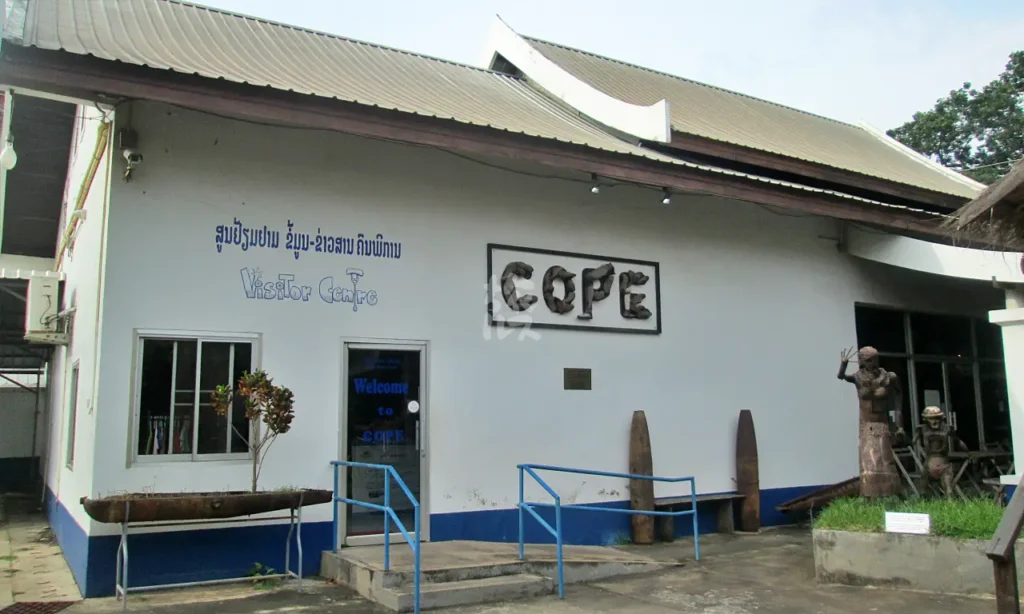
If you want to understand a little more about Laos beyond its tourist attractions, consider visiting the COPE Visitor Centre.
The center introduces visitors to the problem of unexploded ordnance in Laos and the support provided to people affected by it.
When you are simply traveling through Laos, there may not be many opportunities to come face to face with this issue.
The scars of the Vietnam War still remain in the country.
I would not call COPE a must-see for every traveler, but I do think it is a meaningful place to visit.

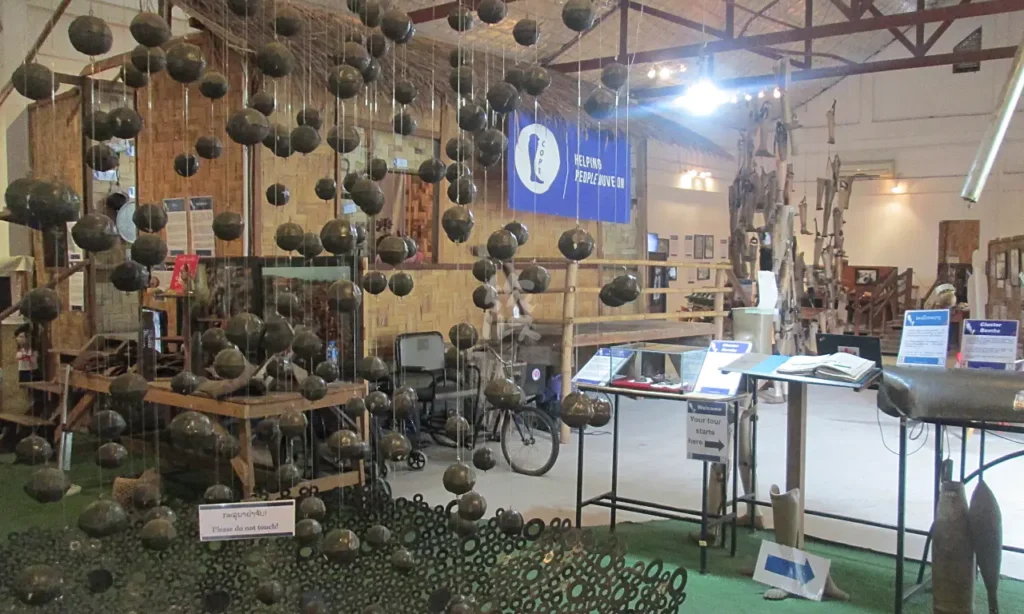
Inside, you can see displays related to unexploded ordnance and cluster munitions, as well as many prosthetic legs.
COPE supports rehabilitation services for people who need prosthetic and orthotic devices.
The Visitor Centre itself is located on the grounds of the Centre of Medical Rehabilitation, or CMR, and COPE works with CMR to support rehabilitation services in Laos.
Admission is free, and donations are accepted.
If you visit, it is worth considering making a donation.
| Address | Boulevard Khou Vieng, Vientiane, Laos |
| Opening hours | 8:30 a.m.–4:00 p.m. |
| Entrance fee: | Free |
How to Get Around Vientiane for Sightseeing

Some of Vientiane's attractions are in the city center, while others, including Pha That Luang and Buddha Park, are farther away.
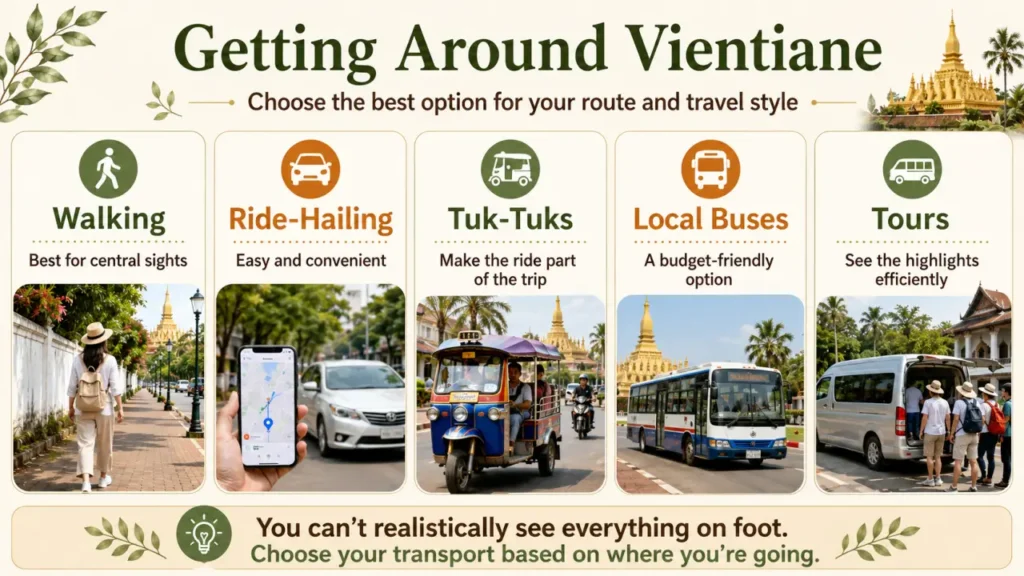
You cannot realistically visit every place in this guide on foot, so it makes sense to choose your transport depending on where you are going.
Walking — Best for Short Distances in Central Vientiane
Some attractions in central Vientiane are close enough to visit on foot.
For example, if you stay near the night market, you can walk to many places around the central area.
Walking also gives you more time to take in the atmosphere of Vientiane.
Walking works well for shorter distances in the center, but sightseeing on foot during the daytime heat can be tiring.
Vientiane has plenty of cafés where you can stop for a break, so there is no need to rush from place to place.
Ride-Hailing Apps and Taxis — Convenient Between Sights
Taxis are a convenient option for traveling between attractions.
Being able to specify your destination makes them useful when you are moving around an unfamiliar city.
An air-conditioned car also helps you save your energy for sightseeing.
This can be especially convenient when traveling as a family, in a group, or with small children.
For rides around Vientiane, consider using LOCA or inDrive.
With LOCA or inDrive, you can see the fare in advance and avoid negotiating the price.
Tuk-Tuks and Motorbike Taxis — Make the Journey Part of the Trip
Tuk-tuks are a familiar sight around the city and can make the journey itself feel like part of your travel experience.
For one person traveling a short distance, a motorbike taxi can also be convenient.
The main downside is that you need to negotiate the price for both tuk-tuks and motorbike taxis.
Some travelers may find that a little inconvenient.
Still, I enjoy riding them.
There is something about moving through the city this way that makes me feel like I am really traveling.
You can find tuk-tuks and motorbike taxis around Vientiane, so you can approach a driver when you need a ride.
Local Buses — A Budget Option for Pha That Luang and Buddha Park
Local buses are another option in Vientiane.
For sightseeing, they can be particularly useful when traveling toward Pha That Luang or Buddha Park.
The trade-off is time: buses can take longer, and depending on how they are running, they may not fit your sightseeing schedule.
On the other hand, the biggest advantage is the lower transport cost.
If keeping travel expenses down matters to you, I would not automatically rule out the bus.
I explain where to catch the bus to Buddha Park and how to use it in my separate Buddha Park guide.
Sightseeing Tours — Best for Seeing the Main Highlights Efficiently
Vientiane has a fairly clear group of classic sights, including Patuxai, Pha That Luang, and Wat Si Saket.
That makes the city well suited to sightseeing tours that combine several major stops.
Many city tours combine some of Vientiane's main attractions into a single sightseeing route.
Buddha Park is particularly far from central Vientiane compared with the other places in this guide.
A tour is worth considering if you want to see the main sights efficiently, especially when Buddha Park is part of your plan.
Best Time to Visit Vientiane for Sightseeing

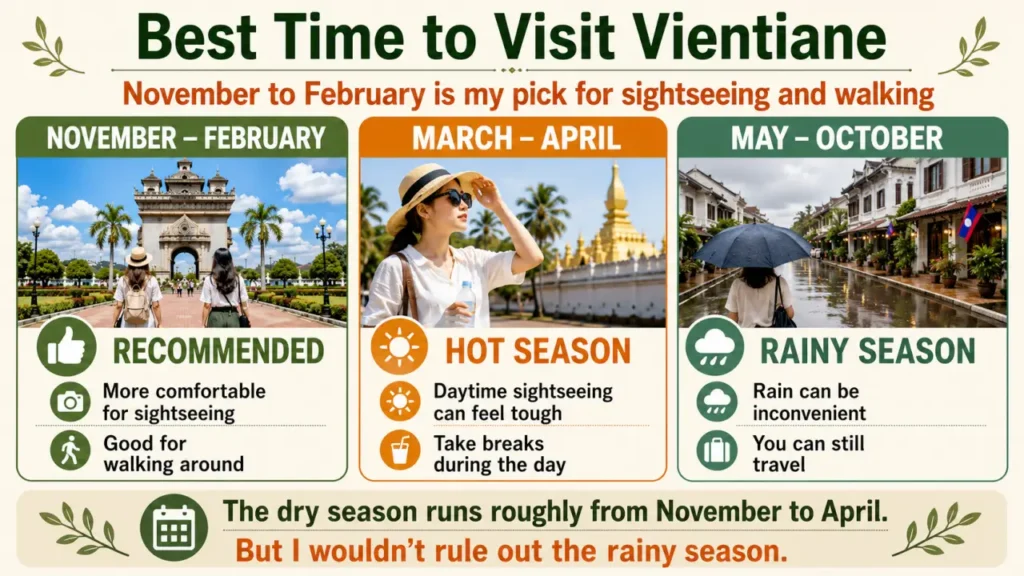
The dry season is generally the easier time for sightseeing in Vientiane because there is less rain.
Vientiane's dry season is roughly from November to April, but temperatures rise toward the later part of the season.
By March and April, daytime sightseeing can feel particularly tough.
My personal recommendation is November to February, when the heat is generally easier to deal with and walking around feels more comfortable.
That said, you can still travel during the rainy season.
I have visited Vientiane in August, right in the middle of the rainy season.
Honestly, the rain was inconvenient, but the temperature felt slightly lower, and I found the season surprisingly manageable in its own way.
I would not rule out Vientiane simply because your trip falls in the rainy season.
Rather than focusing only on the dry months, there is also something to be said for accepting the rain and working around it.
Final Thoughts — Vientiane Has Its Own Kind of Appeal
Vientiane may be described as a city with "nothing to see," but places such as Patuxai, the golden Pha That Luang, and the unusual Buddha Park can still leave a strong impression.
It may not be the kind of city where you want to spend day after day sightseeing in the way you might in Luang Prabang.
But because Vientiane has a relatively limited number of major attractions, it is also easy to see the main highlights during a short stay.
Start with classic sights such as Patuxai and Pha That Luang.
If you have enough time, make the trip out to Buddha Park as well.
For me, Vientiane works best when you do not try to force too much into the schedule.
Enjoy the slower pace, walk along the Mekong, and let the quiet time itself become part of the trip.
\Ready to book? Compare flights and hotels to find the best deal for your dates!/


Comments