This post may contain affiliate links. If you use them to buy something, I may earn a commission at no extra cost to you.
Luang Prabang is often described as a peaceful, beautiful city — and it is.
But beneath that calm surface, Laos also carries a history that still shapes daily life today.
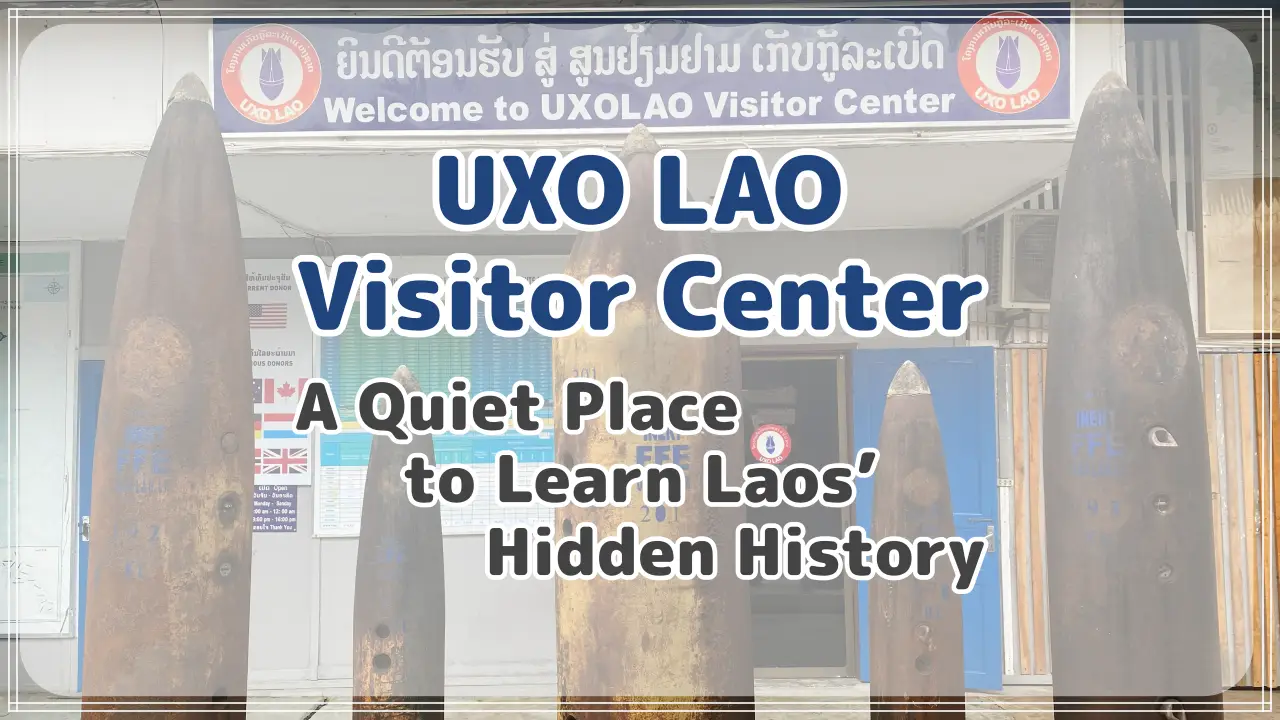
I visited UXO LAO Visitor Center as a short stop during a relaxed day out, and it ended up being one of the most meaningful places I saw in town.
This guide will help you decide whether it is worth visiting, what you can see inside, how long to allow, and what to know before you go.
More to Explore in Luang Prabang
Is UXO LAO Visitor Center worth visiting in Luang Prabang?

Yes — if you want to understand Laos beyond the postcard version of Luang Prabang, this is absolutely worth a stop.
This is not the kind of place people visit for fun.
It is a small, quiet exhibition space focused on Laos’ unexploded ordnance problem, and the topic is heavy.
Still, that is exactly why it matters.
The center is compact, easy to fit into a sightseeing day, and meaningful without requiring half a day.
I visited it together with a nearby herb sauna, and even at a relaxed pace, about 30 to 60 minutes was enough to see everything.
If you only want light, cheerful sightseeing, this may not be the right stop for you.
But if you want to understand the history and reality behind Luang Prabang’s peaceful atmosphere, this place will likely stay with you.
It’s not a flashy attraction — it’s the kind of quiet place that changes how you see the city for the rest of your trip.
UXO LAO Visitor Center opening hours, entry fee, and how long to allow
| Location | Wat Naviengkham village, Luang Prabang, Laos |
| Opening hours | Monday to Friday, 8:00am–11:30am and 1:00pm–4:00pm |
| Price | Free |
| Official website | https://uxolao.gov.la/ |
Suggested visit time: Around 30 to 60 minutes if you want to look around properly, including the videos.
The center is a little outside the main part of town, but it is still easy to reach if you have a bicycle.
Since the visit itself does not take long, it works well as a short stop between other plans.
What is UXO LAO Visitor Center?

UXO stands for “Unexploded Ordnance,” meaning bombs and other explosives that did not detonate when they were dropped.
Laos was heavily bombed by the United States during the war that unfolded alongside the Vietnam War, in what is often called the “Secret War.”
Between 1964 and 1973, it is said that 2 to 3 million tons of bombs were dropped on Laos.
The scale was so extreme that Laos has been described as the most heavily bombed country in the world on a per-capita basis.
What makes this history especially important is that it is not only history.
The traces of that war still remain today in the form of unexploded ordnance.
UXO LAO Visitor Center exists to help visitors understand that reality.
What does UXO LAO actually do in Laos?

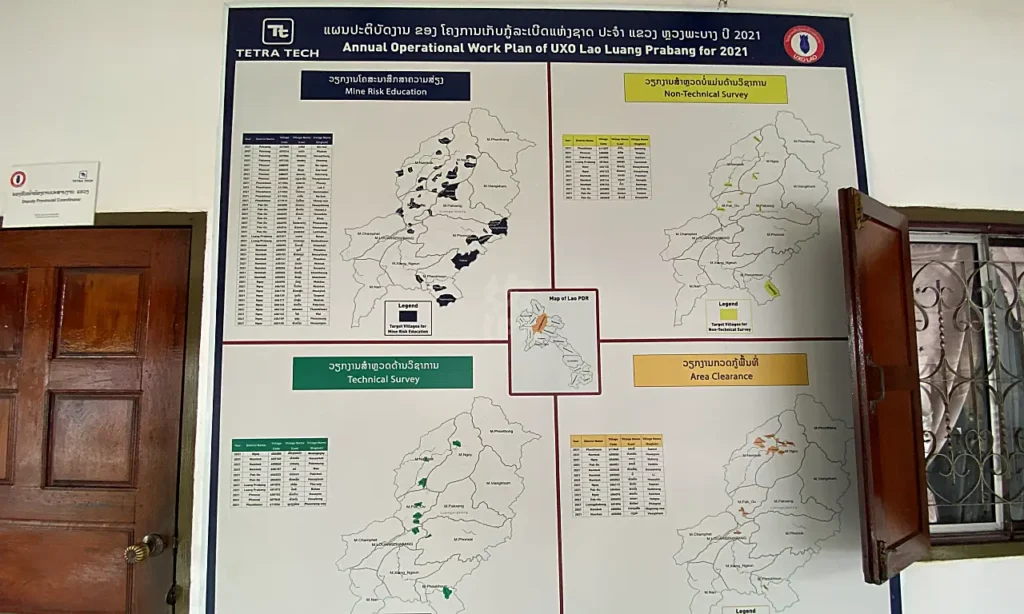
UXO LAO is a government organization created to deal with unexploded ordnance in Laos.
Today, it is headquartered in Vientiane and works in nine provinces, including Luang Prabang.
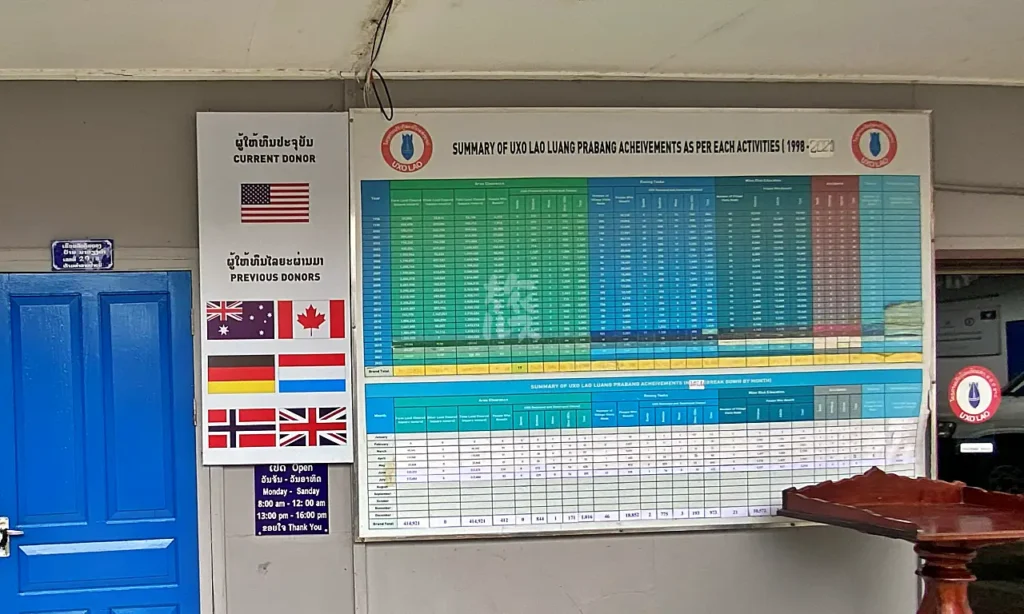
Its main roles include surveying contaminated land, clearing dangerous areas, responding when local residents report suspicious objects, and providing risk education.
This is not a closed chapter of the past.
Unexploded ordnance is still being found, and clearance work continues with support from multiple countries.
That context makes the center more than just an exhibit space.
It helps you understand that this is still a living issue, not only a historical one.
What can you actually see at UXO LAO Visitor Center?

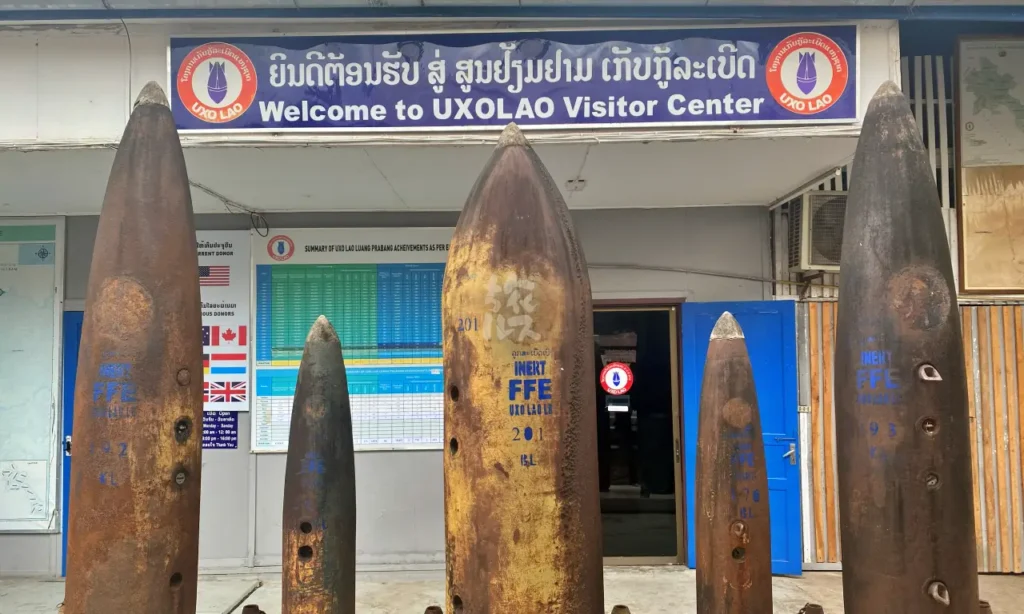
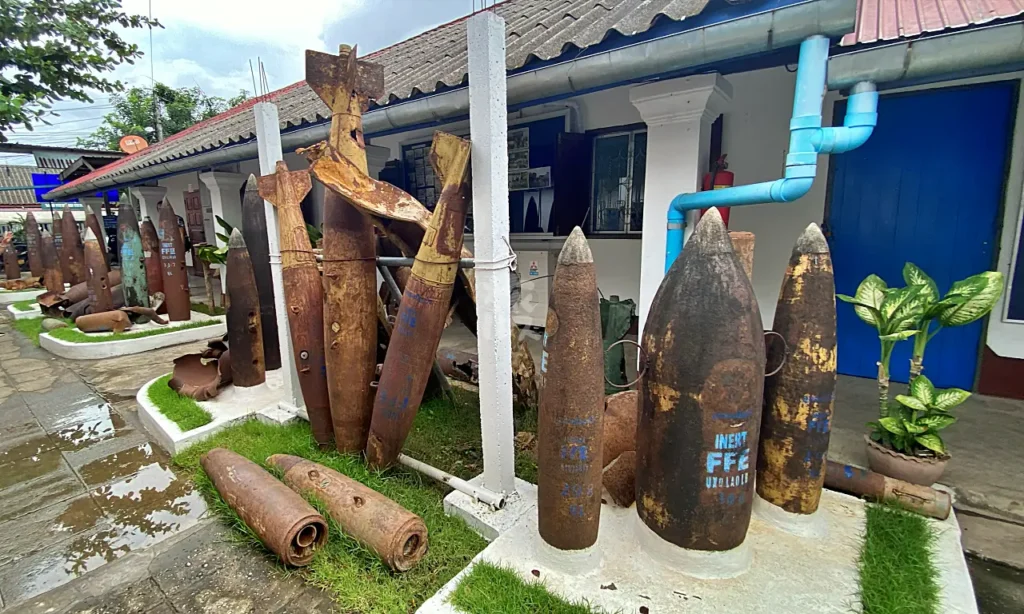
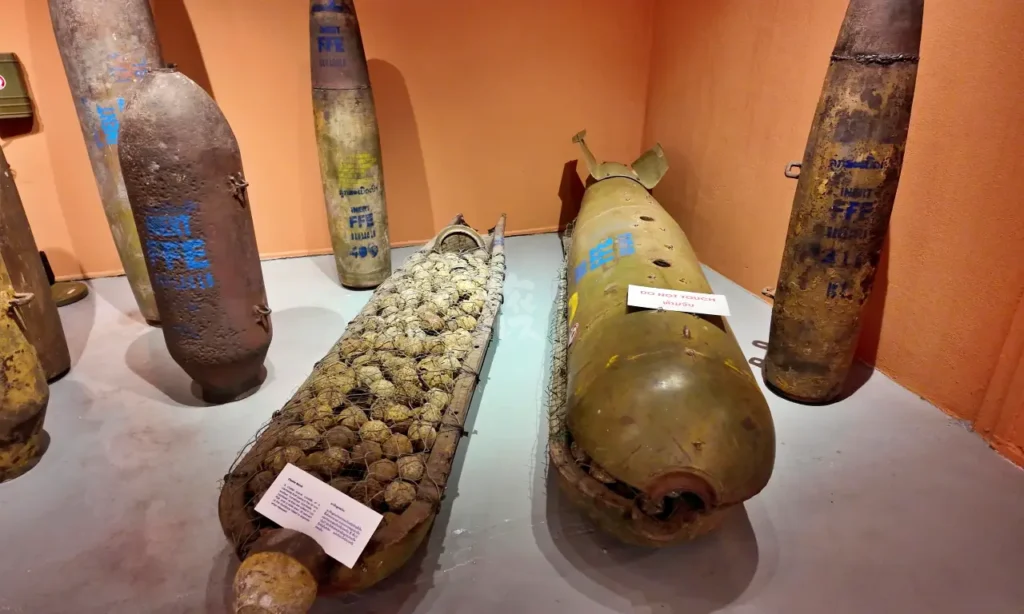
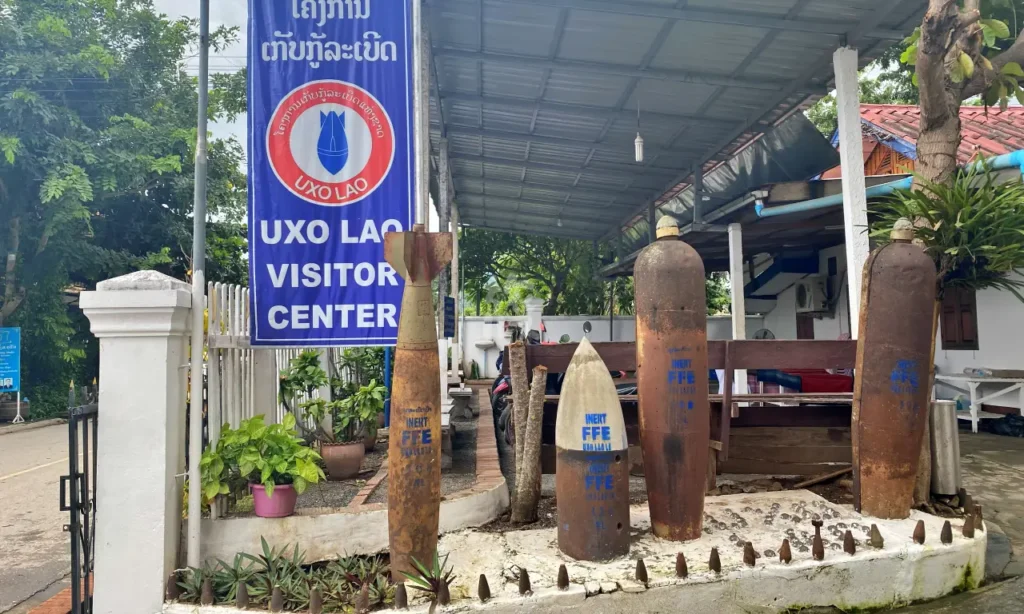
The most striking displays are the real bombs and bomb fragments shown on the grounds.
Seeing them in person was more powerful than I expected.
The size alone gives the issue a physical weight that is hard to feel from reading about it online.
Inside, the exhibition area is quite simple.
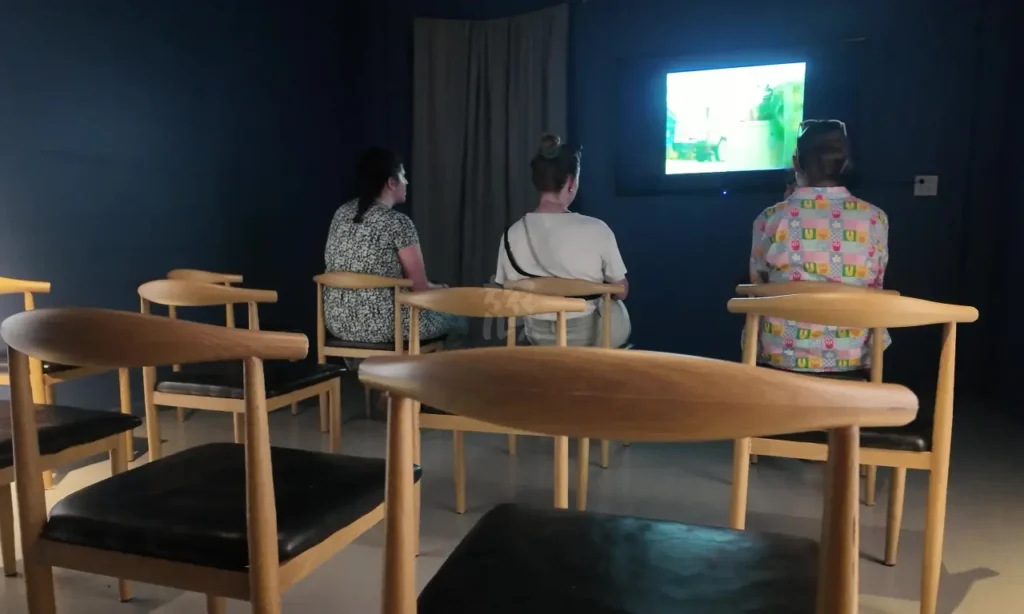
There is a display space and a separate area where you can watch documentary videos.
To be honest, there are not a huge number of exhibits, which is why this is best seen as a compact, meaningful stop rather than a large museum experience.
If you only walk through quickly, you could finish in about 10 minutes.
If you read the panels and spend time with the displays, around 30 minutes feels more realistic.
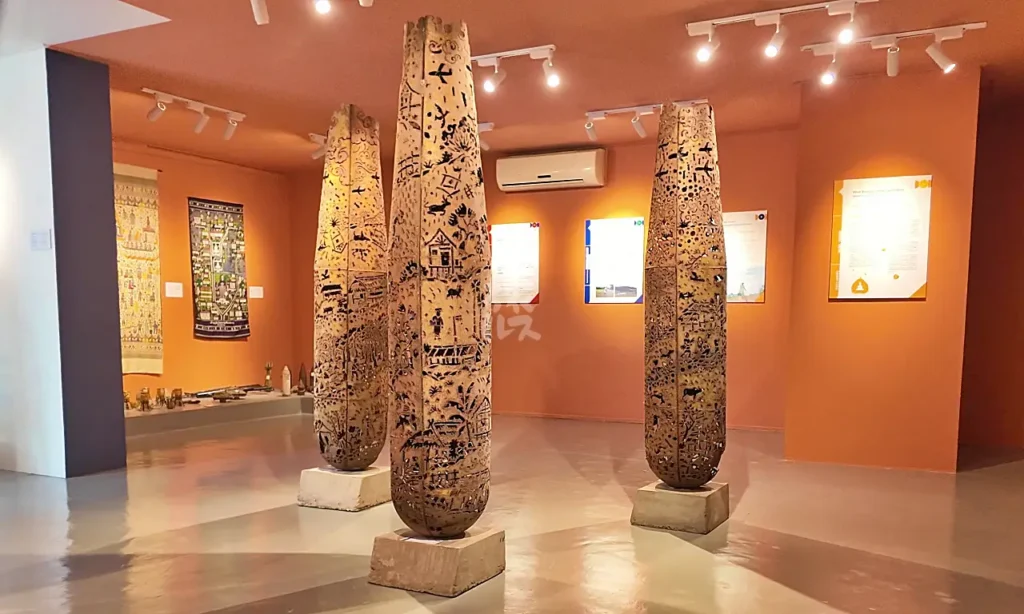
One piece that stayed with me was an object made from a bomb casing, decorated with patterned designs.

At first glance it almost looked gentle or even charming, but when I looked more closely, it felt like a clear anti-war statement — a reminder of how something violent had been transformed into something that makes people stop and think.
There are also displays related to landmines and metal detectors, which help show what UXO LAO’s work looks like on the ground.
Another especially powerful display is the cluster bomb.

Seeing a weapon designed to carry many smaller submunitions makes the unexploded ordnance problem feel much more real.
Don’t skip the documentary videos inside

At the back of the center, there is a video booth showing short documentaries about the Second Indochina War and UXO LAO’s work.
Each video was around 5 to 10 minutes long.
These are worth watching.
The displays themselves are meaningful, but the videos add historical context and help connect the objects in front of you to the bigger picture.
The same videos are also available on YouTube, so even if you are short on time during your visit, you could always watch them later from your hotel.
If you are in a hurry, I would still try to watch at least one video before leaving, because it changes the way the exhibits land.
Why the aluminum products display matters

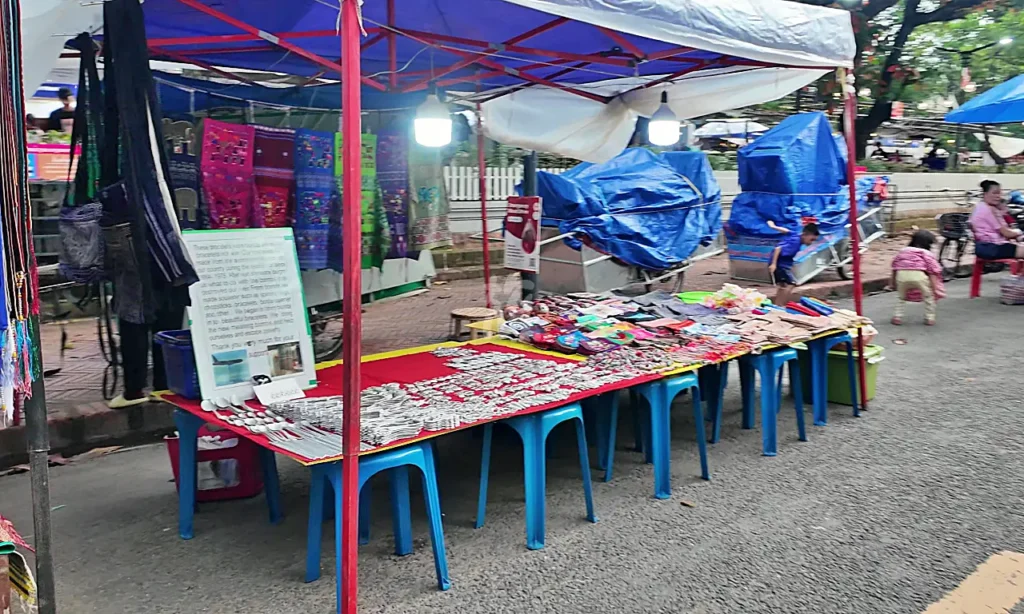
Near the entrance, there is also a display of cutlery and accessories made from aluminum sourced from unexploded ordnance.
This part felt especially interesting because it shows how deeply the issue became tied to everyday life and local culture.
In the past, it was common to see spoons, bangles, and similar items made from melted-down bomb metal in Luang Prabang.
I do not see them as often as before, but some souvenir shops and night market stalls still sell aluminum products linked to this history.
These items are often seen as travel souvenirs, but the display is a useful reminder that they come from a very complicated background.
They are examples of people upcycling the material remains of war — something creative, practical, and unsettling at the same time.
What should you know before visiting UXO LAO Visitor Center?
This is not a graphic war museum, but the subject matter is still heavy.
It is not like the War Remnants Museum in Vietnam, where shocking photo displays can be a major part of the experience.
Even so, the themes here involve war, accidents, and victims, so some travelers may still find it emotionally heavy.
This is a better stop for a calm, thoughtful part of your day than for a rushed sightseeing checklist.
Admission is free, but donations are welcomed.
There is a donation box near the entrance, and if the visit feels meaningful to you, it is worth considering leaving something.
Who should visit UXO LAO Visitor Center in Luang Prabang?

This is a good place for travelers who want more than beautiful temples, cafés, and old-town atmosphere from Luang Prabang.
If you want to understand Laos more deeply — not just as a destination, but as a country with a difficult modern history that still affects daily life — this is one of the most worthwhile short visits in town.
It is also easy to recommend because it does not require much time.
Even though it is a little outside the town center, it is still close enough to visit without much effort, especially if you are cycling.
This place will probably mean the most to travelers who like quiet, thoughtful experiences.
It is not entertainment, and it is not designed to impress in a flashy way.
But if that is exactly what you value — a place that helps you understand where you are, not just look at it — this stop will make sense.
Final thoughts
UXO LAO Visitor Center is a small exhibition space, but it leaves a strong impression.
It is not a cheerful stop, and it is not meant to be.
But that is part of what makes it valuable.
In a city known for beauty and calm, this is a place that helps you understand the harder reality behind that surface.
If you have even a little interest in Laos’ history and present-day reality, I think it is worth making time for.
\ Check out the full list of Luang Prabang sightseeing guides here! /


Comments